


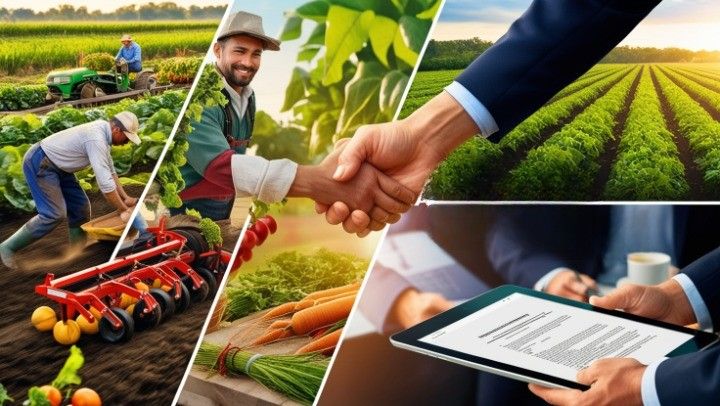

Agriculture is entering a period of significant transformation. Farmers need to produce enough food for a growing global population while responding to climate change, water scarcity, soil degradation, biodiversity loss, rising production costs, and changing consumer expectations.
Traditional methods will continue to play an important role, but the future of sustainable agriculture is increasingly likely to combine proven farming knowledge with new technology, improved resource management, healthier soils, climate-resilient crops, renewable energy, and data-driven decision-making.
The challenge is substantial. The Food and Agriculture Organization of the United Nations (FAO) notes that agriculture accounts for more than 70% of global freshwater withdrawals, while agrifood systems contribute close to one-third of greenhouse gas emissions. At its 2026 Global Conference on Smart Farming, FAO emphasized the growing importance of producing more efficiently while protecting natural resources and improving resilience.
Sustainable agriculture is therefore not simply about reducing environmental harm. It is about developing farming systems that can continue producing food reliably for future generations while supporting farmers, communities, ecosystems, and economies.
What Is Sustainable Agriculture?
Sustainable agriculture refers to farming systems designed to meet current food and agricultural needs while protecting the resources required for future production.
A sustainable farming system attempts to balance several priorities.
It needs to produce sufficient food.
It needs to remain economically practical for farmers.
It should protect soil, water, biodiversity, and other natural resources.
It must also become increasingly resilient to changing climate conditions.
There is no single farming method that defines sustainable agriculture.
Different regions have different climates, crops, soils, economic conditions, and technologies. A sustainable solution for a rice farmer in Southeast Asia may be very different from one used by a wheat producer in North America or a vegetable grower in Africa.
The future will therefore involve a combination of approaches rather than one universal farming model.
Why Is Sustainable Agriculture Becoming More Important?
Agriculture faces several pressures at the same time.
Population growth is increasing long-term demand for food, while climate change is making production conditions less predictable in many regions.
Farmers are dealing with droughts, floods, extreme heat, changing growing seasons, pests, declining soil quality, and increasing competition for water.
At the same time, agriculture itself contributes to environmental pressures.
Agrifood systems account for roughly one-third of global greenhouse gas emissions and use around 70% of freshwater, according to the World Bank.
Sustainable agriculture aims to break this cycle.
The goal is to produce food more efficiently while reducing unnecessary resource use, strengthening resilience, and protecting the ecological systems that agriculture depends upon.
Climate Change Will Shape the Future of Farming
Climate change is already influencing agriculture.
Extreme weather events such as droughts, floods, heat waves, wildfires, and storms can reduce crop yields and damage livestock operations.
Changing temperatures may also influence which crops can be grown successfully in particular regions.
FAO identifies climate resilience as a central requirement for the future of agrifood systems, particularly because smallholder farmers are often among those most exposed to climate-related risks.
Future agricultural systems will therefore need to become more adaptable.
Farmers may use more drought-tolerant crops, improved irrigation, diversified planting systems, weather forecasting, soil conservation practices, and climate-specific management strategies.
Resilience will become just as important as maximizing short-term yield.
Climate-Smart Agriculture Will Continue to Grow
Climate-smart agriculture is an approach designed to address productivity, adaptation, and greenhouse gas emissions together.
Rather than focusing exclusively on producing more food, it considers how agricultural systems can remain productive under changing environmental conditions.
The World Bank describes climate-smart agriculture as combining practices and technologies that can increase productivity, improve resilience, and reduce emissions where possible. These approaches can include climate-resilient crop varieties, conservation agriculture, agroforestry, precision farming, better water management, and improved livestock practices.
The exact combination depends on local conditions.
A drought-prone farm may prioritize water efficiency.
A livestock operation may focus more heavily on feed efficiency and manure management.
A farm experiencing soil erosion may emphasize ground cover and reduced disturbance.
The future of sustainable agriculture will increasingly depend on this locally adapted approach.
Precision Agriculture Will Become More Common
Precision agriculture uses data and technology to manage crops and resources more accurately.
Traditional farming may apply water, fertilizer, or crop protection products uniformly across an entire field.
Precision agriculture recognizes that different areas of the same field can have different needs.
Sensors, GPS systems, satellite imagery, drones, soil testing, and farm-management software can help identify those differences.
A farmer may discover that one area requires additional irrigation while another already has adequate moisture.
Fertilizer can potentially be applied where it is needed rather than automatically across the entire field.
This can improve efficiency while reducing unnecessary input use.
As technology becomes more affordable and accessible, precision agriculture is likely to become an increasingly important component of sustainable farming.
Artificial Intelligence Will Play a Larger Role in Agriculture
Artificial intelligence is beginning to influence many parts of agriculture.
AI systems can analyze large amounts of information from weather forecasts, satellite imagery, soil sensors, machinery, and historical farm records.
This information can help identify patterns that would be difficult to detect manually.
Potential applications include predicting crop diseases, identifying pests, estimating yields, optimizing irrigation, monitoring livestock, improving planting decisions, and supporting supply-chain planning.
FAO increasingly treats digital agriculture and AI as important tools for creating more efficient, resilient, inclusive, and sustainable agrifood systems. Its current work includes developing frameworks for responsible AI adoption in agriculture rather than treating technology as a solution without appropriate governance.
AI will probably support farmers rather than completely replace agricultural expertise.
Local experience will remain essential because farming conditions vary enormously between regions and even individual fields.
Smart Farming Will Connect More Agricultural Technologies
Smart farming combines digital technologies, data, sensors, automation, and improved agricultural practices.
FAO describes smart farming as an approach that can help farmers produce more efficiently while using fewer resources and strengthening resilience. Its 2026 Global Conference on Smart Farming highlighted the growing role of data-driven and farmer-centered technologies in sustainable agriculture.
A smart farm may combine soil sensors with automated irrigation.
Weather data might influence planting decisions.
Digital platforms could track crop performance.
Drones may inspect fields.
Artificial intelligence may analyze images and identify possible disease.
These technologies can work together rather than functioning as isolated tools.
The future will likely involve increasingly connected farming systems.
Sensors Will Help Farmers Use Resources More Efficiently
Agricultural sensors can measure conditions such as soil moisture, temperature, humidity, nutrient levels, and environmental conditions.
Instead of relying only on visual inspection or fixed schedules, farmers can receive more specific information about what is happening in their fields.
Soil-moisture sensors, for example, can indicate when irrigation is genuinely necessary.
This can reduce both underwatering and unnecessary watering.
Sensors in livestock facilities may monitor temperature, movement, feeding behavior, or other indicators.
As sensor prices decline and connectivity improves, real-time monitoring may become common across a wider range of farms.
Drones Will Expand Agricultural Monitoring
Drones can inspect large agricultural areas relatively quickly.
Cameras and specialized sensors can capture information about crop health, water stress, weeds, disease, and field conditions.
This can help farmers identify problems earlier.
Rather than walking through every part of a large field, a producer may use aerial imagery to determine which sections require closer inspection.
Drones may also support targeted applications or mapping where local regulations permit.
Their greatest sustainability benefit may come from better information.
More accurate monitoring can help farmers respond to problems without automatically applying the same treatment everywhere.
Agricultural Robotics May Address Labor Challenges
Robotics is another important area of agricultural development.
Machines are being developed for tasks such as harvesting, weeding, planting, crop monitoring, and fruit picking.
Agricultural robots could become especially valuable where farms face labor shortages.
They may also allow certain tasks to be performed more precisely.
For example, robotic weed control could potentially target individual weeds rather than treating an entire field.
However, costs remain important.
Large commercial farms may be able to adopt advanced robotics sooner than small farms.
Future innovation will need to focus on making automation affordable and practical for a wider range of producers.
Autonomous Farm Machinery May Become More Common
Modern tractors already contain increasingly sophisticated navigation and automation systems.
Future machinery is likely to become even more autonomous.
GPS-guided tractors can follow highly accurate routes.
Automated equipment may eventually perform certain planting, spraying, cultivation, and harvesting tasks with reduced direct human control.
Greater accuracy could reduce overlapping passes across fields.
That may save fuel, reduce soil compaction, and improve input efficiency.
However, autonomous machinery will also introduce questions about cost, maintenance, cybersecurity, safety, ownership, and access.
Technology will need to provide measurable benefits rather than simply making farms more technologically complex.
Soil Health Will Become a Central Agricultural Priority
Healthy soil is the foundation of agriculture.
Soil provides nutrients, stores water, supports plant roots, and contains enormous communities of microorganisms.
Poor soil management can lead to erosion, nutrient loss, reduced water retention, and declining productivity.
Future sustainable farming will increasingly emphasize maintaining or improving soil health.
Practices may include crop rotation, cover cropping, reduced soil disturbance, organic amendments, erosion control, and maintaining living roots for longer portions of the year.
Healthier soils can often hold water more effectively and may help farms become more resilient during drought or heavy rainfall.
Regenerative Agriculture Will Continue to Influence Farming
Regenerative agriculture has attracted growing interest because of its emphasis on improving soil health and ecosystem function.
There is no universally accepted single definition of regenerative agriculture, and practices vary significantly.
Common approaches may include cover crops, diverse rotations, reduced tillage, managed grazing, compost use, and integrating livestock or trees where appropriate.
The goal is generally to move beyond simply reducing damage and toward improving the condition of agricultural ecosystems.
However, results can vary depending on climate, soil, crop, and farm management.
The future of regenerative agriculture will likely depend on stronger measurement and evidence showing which practices provide meaningful benefits under specific conditions.
Cover Crops May Become More Widely Used
Cover crops are grown partly to protect and improve soil rather than primarily for harvest.
They can reduce exposed soil between major crop cycles.
Depending on the species and system, cover crops may help reduce erosion, improve soil structure, retain nutrients, suppress weeds, or add organic matter.
Some farmers also use legumes that can contribute nitrogen to farming systems.
Cover crops are not suitable in exactly the same way everywhere.
Water availability, climate, costs, and planting schedules matter.
Future sustainable agriculture will increasingly focus on matching cover-crop strategies to local agricultural conditions.
Crop Rotation Will Remain Important
Crop rotation is one of agriculture’s oldest sustainability techniques.
Growing the same crop continuously can increase certain pest, disease, and soil-management challenges.
Changing crops between seasons can interrupt some pest cycles and create greater biological diversity.
Different crops also interact with soil differently.
Deep-rooted crops may access nutrients differently from shallow-rooted plants.
Legumes can play a role in nitrogen management.
Crop rotation will remain important even as farming becomes more technologically advanced.
Some of the best future systems will combine new technology with agricultural practices that have been used successfully for generations.
Reduced Tillage May Help Protect Soil
Conventional tillage can prepare soil effectively for planting, but repeated intensive disturbance can contribute to erosion and loss of soil structure under some conditions.
Reduced-tillage and no-till systems minimize soil disturbance.
These approaches can help maintain crop residues on the surface and reduce erosion.
However, reduced tillage is not a universal solution.
Different soils, climates, weed pressures, and crop systems may require different approaches.
Sustainable agriculture will increasingly depend on evaluating trade-offs rather than declaring one practice suitable for every farm.
Water Efficiency Will Become Critical
Water may become one of the defining agricultural challenges of the coming decades.
Agriculture already represents the majority of global freshwater withdrawals.
Population growth, urban demand, industrial activity, drought, and climate change are increasing competition for water in many regions.
Future farms will need to produce more value from each unit of water.
This can involve improved irrigation, water recycling, drought-resistant crops, soil-management practices that retain moisture, and more accurate scheduling.
Water efficiency will increasingly become both an environmental and economic priority.
Drip Irrigation Will Remain an Important Technology
Drip irrigation delivers water directly to the root zone of plants through tubes or emitters.
Compared with less targeted irrigation methods, it can reduce water loss in suitable systems.
Farmers can also combine drip irrigation with sensors and automated controls.
This allows irrigation to respond more closely to actual plant and soil conditions.
However, drip systems require investment and maintenance.
They may not be appropriate for every crop or farming environment.
Future innovation will likely focus on making efficient irrigation technologies more affordable and durable.
Rainwater Harvesting Can Improve Farm Resilience
Capturing rainfall for later use can reduce dependence on external water supplies in suitable regions.
Farm ponds, tanks, reservoirs, and other collection systems can store water during periods of rainfall.
That water may later support irrigation or livestock.
Rainwater harvesting can be particularly valuable where precipitation is seasonal.
However, design needs to account for local rainfall, water quality, evaporation, safety, and regulations.
Combined with efficient irrigation, water storage can improve resilience to shorter dry periods.
Drought-Resistant Crops Will Become More Important
Plant breeding has always played a role in helping agriculture adapt to local conditions.
Future breeding programs will increasingly focus on climate resilience.
Researchers are developing crop varieties that can tolerate drought, heat, flooding, salinity, pests, and disease more effectively.
These characteristics may become increasingly important as growing conditions change.
Traditional breeding, marker-assisted breeding, genomic tools, and biotechnology may all contribute.
The objective is not simply higher maximum yields.
Stable production under difficult conditions may become equally valuable.
Biotechnology Will Continue to Influence Sustainable Agriculture
Biotechnology covers a wide range of agricultural techniques.
Some are used to identify useful plant traits.
Others support faster crop breeding or create specific genetic characteristics.
Modern gene-editing technologies may allow researchers to make targeted changes more quickly than conventional breeding alone.
Potential applications include disease resistance, improved nutrition, drought tolerance, and reduced crop losses.
However, agricultural biotechnology will continue to involve scientific, regulatory, economic, and public-policy discussions.
Its role will differ between countries depending on regulations and public acceptance.
Biodiversity Will Become More Important in Farm Planning
Agriculture depends on biodiversity.
Pollinators support many crops.
Soil organisms contribute to nutrient cycling.
Natural predators can help control agricultural pests.
Genetic diversity among crops and livestock can improve resilience.
Future sustainable agriculture will increasingly consider farms as parts of larger ecosystems.
This could involve maintaining hedgerows, protecting pollinator habitats, rotating crops, reducing unnecessary pesticide exposure, preserving natural areas, or using more diverse farming systems.
Agricultural production and biodiversity conservation do not always have identical goals, but better planning can reduce unnecessary conflicts.
Agroforestry Could Expand
Agroforestry combines trees or shrubs with crops or livestock.
Examples include growing crops between rows of trees, maintaining windbreaks, or integrating trees into grazing areas.
Trees can provide shade, reduce wind erosion, support wildlife, contribute organic material, and sometimes provide additional products such as fruit, timber, or nuts.
Agroforestry can also help store carbon in vegetation and soils.
However, trees compete for water and nutrients in some environments, so good design is important.
Future systems will increasingly focus on matching tree species and arrangements to local farming needs.
Sustainable Livestock Farming Will Become More Important
Livestock provides food, income, fertilizer, and livelihoods for many communities.
At the same time, livestock production can have significant environmental impacts.
Future sustainable livestock systems will focus on improving efficiency while reducing unnecessary resource use and emissions.
Potential strategies include improved animal health, better feed, more efficient breeding, improved grazing management, manure management, and technologies designed to reduce methane emissions.
Better productivity per animal may allow some systems to produce the same amount of food with fewer resources.
The most appropriate strategy will depend on the livestock species and farming environment.
Methane Reduction Will Be a Major Research Area
Methane is an important greenhouse gas associated with ruminant livestock and manure management.
Researchers and companies are developing methods intended to reduce agricultural methane emissions.
These include improved diets, feed additives, breeding approaches, manure treatment, and better grazing systems.
Some technologies remain relatively new and may not yet be practical everywhere.
Cost, effectiveness, animal health, regulations, and farmer access will all influence adoption.
Nevertheless, reducing methane is likely to remain an important part of agricultural climate strategies.
Renewable Energy Will Become More Common on Farms
Farms require energy for irrigation, heating, cooling, machinery, storage, and processing.
Renewable energy can help reduce dependence on fossil fuels.
Solar panels are increasingly used to provide electricity for farms and irrigation systems.
Biogas systems can use certain agricultural wastes to produce energy.
Wind power may also be suitable in some locations.
Renewable energy can potentially reduce operating costs as well as emissions.
The financial benefits depend on energy prices, installation costs, government policies, farm size, and local conditions.
Agrivoltaics Could Combine Energy and Food Production
Agrivoltaics involves using land for both agriculture and solar-energy production.
Solar panels may be installed above or between crops while farming continues below or around them.
In some climates, partial shading may even benefit certain crops by reducing extreme heat or water loss.
However, results depend heavily on crop type, panel arrangement, and local conditions.
Agrivoltaics will not replace conventional farmland or solar farms everywhere.
It represents another example of how future agricultural systems may combine multiple land uses more efficiently.
Vertical Farming Will Have a Specialized Role
Vertical farming grows crops in stacked indoor environments.
These systems typically use controlled lighting, temperature, nutrients, and water.
Because conditions are managed precisely, production can occur close to cities and potentially throughout the year.
Water can often be reused efficiently.
However, vertical farms require significant infrastructure and energy.
They are currently better suited to high-value crops such as leafy greens and herbs than major global staples such as wheat, rice, or corn.
The future of vertical farming is therefore likely to be specialized rather than a complete replacement for conventional agriculture.
Controlled-Environment Agriculture Will Continue to Develop
Greenhouses and other protected cultivation systems allow farmers to control environmental conditions more effectively.
Plants can be protected from excessive heat, cold, rain, wind, or pests.
Protected systems may extend growing seasons and improve crop quality.
FAO’s current Smart Farming approach includes protected cultivation among the technologies that can improve productivity, resource efficiency, and resilience for horticultural producers.
Future greenhouses may increasingly combine sensors, automated ventilation, precision irrigation, robotics, and AI.
The challenge will be making these technologies affordable enough for broad adoption.
Hydroponics and Soilless Farming May Expand
Hydroponic systems grow plants using nutrient solutions rather than traditional soil.
Water can circulate through the system and be reused.
This can make hydroponics attractive in areas with limited land or water.
Controlled environments also allow more precise nutrient management.
However, hydroponic systems require infrastructure, expertise, energy, and careful management.
They will probably complement rather than replace soil-based farming.
Their greatest potential may be in urban environments, water-limited regions, and high-value horticultural production.
Biofertilizers and Biological Inputs May Grow
Agricultural production often depends on fertilizers and crop-protection products.
Future sustainable agriculture may increasingly incorporate biological alternatives or complements.
Biofertilizers use microorganisms or biological processes to support plant nutrition.
Biological pest-control products use organisms or naturally derived compounds to manage pests and diseases.
These technologies may reduce reliance on some conventional inputs.
However, performance can vary depending on conditions.
Reliable research, quality control, and proper application will remain essential.
Integrated Pest Management Will Become More Important
Integrated pest management, often called IPM, combines multiple methods for controlling pests.
Instead of automatically relying on one treatment, farmers monitor pest populations and select appropriate responses.
Biological controls, resistant crop varieties, habitat management, crop rotation, mechanical methods, and chemical controls can all be part of an IPM system.
The goal is effective pest control with fewer unnecessary interventions.
Improved sensors, AI image recognition, and digital monitoring may make IPM even more precise in the future.
Food Loss and Waste Will Receive Greater Attention
Sustainable agriculture does not end at the farm gate.
Producing food that is later lost or wasted also consumes land, water, energy, labor, and agricultural inputs unnecessarily.
Reducing post-harvest losses can therefore increase effective food availability without requiring equivalent increases in production.
Better storage, refrigeration, transportation, packaging, processing, and market information can all help.
UNEP’s recent work on agribusiness transformation emphasizes that sustainability requires changes across the wider food system, not only changes in individual farming practices.
Better Supply Chains Will Improve Sustainability
Agricultural supply chains connect farms with processors, retailers, restaurants, and consumers.
Inefficient supply chains can create food losses, unnecessary transportation, poor market access, and lower farmer incomes.
Digital systems may help farmers understand market demand and connect with buyers.
Improved cold storage can extend the life of perishable foods.
Traceability systems may help businesses identify where products came from and how they were produced.
Sustainable agriculture increasingly involves optimizing the entire journey from farm to consumer.
Blockchain May Have a Limited but Useful Role
Blockchain technology has sometimes been promoted as a solution for agricultural traceability.
It can potentially create records showing how products move through supply chains.
This could be useful where buyers need evidence about origin, certification, or particular production practices.
However, blockchain is not automatically necessary for every agricultural supply chain.
Conventional databases may solve many of the same problems at lower cost.
The technology’s future role will depend on whether it provides meaningful practical advantages rather than simply adding complexity.
Digital Marketplaces Could Improve Farmer Access
Small farmers sometimes struggle to reach buyers or receive useful market information.
Digital marketplaces may help connect producers directly with customers, wholesalers, processors, or retailers.
Mobile platforms can also provide pricing information.
Better information can strengthen farmers’ negotiating position and reduce uncertainty about demand.
FAO’s work on digital agriculture increasingly recognizes digital tools as useful not only for production but also for improving value chains and market access.
Connectivity and digital literacy will determine how widely these benefits are shared.
Small Farmers Must Be Included in Agricultural Innovation
Some of the world’s most advanced agricultural technologies are expensive.
That creates a major sustainability challenge.
If precision equipment, AI platforms, sensors, irrigation systems, and improved seeds are available only to large commercial farms, smaller producers may be left behind.
FAO emphasizes inclusive smart farming, particularly affordable technology and improved access for small-scale farmers.
Future agricultural policy will need to consider financing, training, infrastructure, cooperatives, shared equipment, and affordable digital services.
Technology can only transform agriculture if farmers can actually use it.
Digital Connectivity Will Become Agricultural Infrastructure
Internet access may increasingly become as relevant to modern agriculture as roads, electricity, and irrigation.
Connected farms can access weather forecasts, market prices, digital extension services, equipment data, and remote monitoring systems.
Poor connectivity can limit these benefits.
Rural broadband and mobile-network expansion will therefore play an important role in the future of agricultural technology.
The digital divide is not only a technology problem.
It can become an agricultural productivity and competitiveness problem.
Farmers Will Need New Skills
Future farmers will still need traditional agricultural knowledge.
However, additional skills may become increasingly valuable.
Farmers may need to understand software dashboards, sensor information, automated machinery, digital financial tools, and online marketplaces.
Agricultural education will therefore evolve.
Training programs may combine crop and livestock expertise with data interpretation, technology maintenance, business management, and sustainability measurement.
Future agricultural success will increasingly depend on combining practical farming knowledge with digital capability.
Agricultural Data Will Become More Valuable
Modern farms can generate enormous amounts of data.
Machines record field operations.
Sensors monitor soil.
Drones capture images.
Software tracks costs and yields.
Weather platforms provide forecasts.
When combined effectively, this information can improve decision-making.
However, agricultural data also raises questions.
Who owns the data generated by farm machinery?
Can technology companies use it?
How securely is it stored?
Can farmers move their information between platforms?
Clear standards around privacy, ownership, portability, and security will become increasingly important as agriculture becomes more digital.
Sustainable Agriculture Must Remain Economically Viable
Environmental improvements cannot be sustained if farmers cannot earn a reasonable living.
Farmers face expenses related to land, labor, fertilizer, machinery, fuel, insurance, seeds, livestock, technology, and financing.
Some sustainable practices require substantial upfront investment.
Benefits may also take years to appear.
Future agricultural policies and business models need to recognize this reality.
Loans, insurance, incentives, technical support, payments for ecosystem services, and stronger markets may help farmers manage the transition.
Sustainable agriculture must work financially as well as environmentally.
Sustainable Finance Will Influence Farm Transformation
Farmers may need capital to install efficient irrigation, purchase precision equipment, adopt renewable energy, improve storage, or transition to new production practices.
Financial institutions can influence how quickly these changes occur.
Green loans, climate finance, agricultural insurance, grants, and public-private investment may become increasingly important.
The World Bank argues that agriculture offers significant opportunities for climate investment because improved land and farming systems can both reduce emissions and increase resilience.
However, financing needs to remain accessible to smaller producers rather than concentrating only on large businesses.
Agricultural Insurance May Become More Data-Driven
Climate change can make agricultural risks harder to predict.
Insurance can help farmers recover from crop losses or extreme weather.
Future agricultural insurance may increasingly use satellite information, weather data, sensors, and digital records.
Some systems may use index-based insurance, where payments are triggered by measurable conditions such as rainfall rather than individual farm inspections.
Digital systems may make insurance faster and less expensive to administer.
However, products need to remain understandable and fair to farmers.
Carbon Markets May Create New Opportunities and Challenges
Farmers and landowners may increasingly receive payments for practices intended to reduce or remove greenhouse gas emissions.
Examples might involve soil-carbon management, tree planting, methane reduction, or improved fertilizer practices.
However, measuring agricultural carbon accurately can be difficult.
Changes in soil carbon may vary across locations and years.
Future carbon markets will need reliable measurement, verification, and long-term standards.
Farmers should also understand contract requirements before committing land or practices for extended periods.
Policy Will Shape the Future of Sustainable Farming
Technology alone cannot transform agriculture.
Government policy strongly affects agricultural markets, land management, water use, research, environmental protection, trade, and farm economics.
Policies may encourage sustainable practices through research funding, technical assistance, infrastructure investment, incentives, regulations, or financing.
Poorly designed policies can also slow innovation.
The future of sustainable agriculture will depend partly on governments creating conditions where environmental improvements and farm profitability can support each other.
Agricultural Research Will Remain Essential
Many agricultural challenges do not have simple solutions.
Researchers need to continue improving crops, livestock systems, soil management, irrigation, robotics, biological inputs, food storage, and climate adaptation.
Long-term field research is particularly important.
A practice that appears promising during one season may behave differently across climates or over many years.
Public agricultural research will remain valuable because not every important innovation has an immediate commercial market.
Research helps farmers distinguish genuinely useful technologies from temporary trends.
Consumers Will Influence Sustainable Agriculture
Consumer preferences affect agricultural markets.
Demand for products associated with environmental standards, animal welfare, local production, organic farming, or lower emissions can influence how businesses operate.
However, consumers also care strongly about affordability.
Sustainable food systems therefore need to avoid becoming accessible only to higher-income households.
Clear labeling and credible standards are also important.
Consumers cannot make informed choices if environmental claims are confusing or difficult to verify.
Sustainable Agriculture Will Need Better Measurement
One of the biggest future challenges is defining what sustainability actually means in measurable terms.
A practice may reduce greenhouse gas emissions but require more water.
Another may improve biodiversity while producing lower yields.
A technology might reduce fertilizer use but require substantial energy.
Sustainability therefore involves trade-offs.
Future agricultural assessments are likely to use broader measurements involving water, soil, emissions, biodiversity, productivity, profitability, and social outcomes.
Better data can help decision-makers avoid focusing on one environmental metric while ignoring others.
There Will Be No Single Sustainable Farming System
Debates about agriculture sometimes present one approach as the universal solution.
Reality is more complicated.
Organic farming, regenerative practices, precision technology, biotechnology, agroforestry, hydroponics, conventional agriculture, and controlled-environment farming can all provide useful solutions in certain contexts.
The right approach depends on the crop, climate, soil, resources, economics, and local community.
The future of sustainable agriculture will probably be diverse.
Successful systems will combine techniques based on evidence rather than labels.
Technology Alone Will Not Solve Agricultural Sustainability
Technology has enormous potential, but it cannot solve every agricultural challenge.
A sensor cannot correct poor land policy.
Artificial intelligence cannot automatically provide farmers with financing.
A drone cannot replace functioning roads or markets.
Improved seeds cannot solve every water shortage.
Sustainable agricultural development requires technology alongside education, infrastructure, economic opportunity, research, effective policy, and environmental protection.
Innovation works best when these systems support one another.
Traditional Agricultural Knowledge Will Remain Valuable
Future agriculture will not simply replace old knowledge with new technology.
Farmers have developed locally adapted practices over generations.
Traditional knowledge can provide valuable information about weather, soil, crop diversity, livestock, water management, and ecosystems.
Combining this knowledge with scientific research and modern technology may produce stronger solutions.
The future of sustainable agriculture is therefore likely to involve integration rather than replacement.
Collaboration Will Become Increasingly Important
Agricultural transformation requires cooperation among many groups.
Farmers understand practical challenges.
Scientists develop new technologies and management methods.
Governments create regulations and infrastructure.
Financial institutions provide capital.
Technology companies build digital tools.
Food companies influence supply chains.
Consumers influence demand.
No individual group can transform the food system alone.
UNEP’s analysis of sustainable agribusiness emphasizes the need for governments, financial institutions, companies, intergovernmental organizations, and civil society to work together to overcome structural barriers to change.
What Will Farms of the Future Look Like?
There will not be one universal farm of the future.
A large grain operation may use autonomous tractors, satellite imagery, variable-rate applications, soil sensors, and AI-assisted planning.
A small vegetable farm might use affordable protected cultivation, drip irrigation, mobile weather information, and digital marketplaces.
An urban farm could use hydroponics inside a controlled environment.
A livestock operation may combine improved grazing, smart collars, automated feeding, renewable energy, and methane-management technologies.
Different technologies will be combined according to local needs.
The common theme will be producing food more intelligently while using resources more carefully.
The Biggest Challenges Facing Sustainable Agriculture
The transition will not be easy.
New technologies can be expensive.
Farmers may lack financing.
Internet connectivity can be limited.
Some sustainable practices require new knowledge and additional labor.
Agricultural markets may not reward environmental improvements.
Policies may change slowly.
Climate conditions themselves are becoming more unpredictable.
The global food system also contains economic structures that can discourage sustainable investment. UNEP has identified issues including market incentives, concentration, and investment patterns as barriers to agribusiness transformation.
Solving these problems will require long-term investment rather than one technological breakthrough.
The Future of Sustainable Agriculture Is Already Beginning
Many technologies associated with the “farm of the future” already exist.
Farmers are using satellite imagery.
Sensors are controlling irrigation.
AI is analyzing agricultural information.
Robots are performing selected farm tasks.
Drought-resistant crops are being developed.
Renewable energy is powering agricultural equipment.
Regenerative and conservation practices are being tested across diverse farming systems.
In 2026, FAO described smart farming as no longer merely a future ambition but an increasingly important part of improving productivity, resilience, and resource efficiency.
The future will therefore involve expanding, improving, and adapting technologies and practices that are already emerging today.
Benefits of Sustainable Agriculture
The potential benefits extend far beyond farms.
More efficient water use can help preserve limited freshwater resources.
Healthier soils can support agricultural resilience.
Reduced food loss can increase effective food availability.
Lower emissions can contribute to climate goals.
Improved productivity can strengthen farmer incomes.
Greater biodiversity can support healthier ecosystems.
Better agricultural technology can also make farming more attractive to younger generations by creating new opportunities involving engineering, data science, robotics, business, and environmental management.
The most successful systems will generate environmental, economic, and social benefits simultaneously.
Final Thoughts
The future of sustainable agriculture will be shaped by one central challenge: producing enough nutritious food while protecting the natural systems that future food production depends upon.
There will be no single technology or farming practice capable of solving every problem.
Instead, sustainable agriculture will combine better soil management, efficient water use, climate-resilient crops, precision farming, artificial intelligence, sensors, robotics, renewable energy, biodiversity protection, improved livestock systems, and stronger food supply chains.
Technology will play a major role, but successful transformation will also require affordable financing, farmer education, scientific research, rural infrastructure, supportive policies, and fair markets.
Small-scale farmers must be included rather than left behind.
Agricultural sustainability also needs to remain economically realistic. Farmers cannot maintain environmental improvements if farming itself becomes financially unsustainable.
The farms of the future may look very different from one another. Some will be highly automated. Others will rely on relatively simple, affordable technologies combined with improved agricultural practices.
What they increasingly have in common will be a focus on efficiency, resilience, and responsible resource management.
Sustainable agriculture is therefore not simply about changing how food is grown today.
It is about creating agricultural systems capable of continuing to feed people decades from now.
Frequently Asked Questions About the Future of Sustainable Agriculture
What is sustainable agriculture?
Sustainable agriculture is an approach to food production that aims to meet current needs while protecting natural resources, supporting farmers, and maintaining the ability to produce food in the future.
Why is sustainable agriculture important?
Sustainable agriculture is important because farming depends on soil, water, biodiversity, and stable environmental conditions. Protecting these resources helps support long-term food security and agricultural productivity.
What is the future of sustainable agriculture?
The future is likely to combine traditional farming knowledge with precision agriculture, AI, robotics, climate-resilient crops, efficient irrigation, soil-health practices, renewable energy, and improved supply chains.
How will technology change agriculture?
Technology can help farmers monitor crops more accurately, use water and fertilizer more efficiently, automate repetitive tasks, predict risks, identify pests, and make better decisions using farm data.
What is smart farming?
Smart farming combines agricultural knowledge with technologies such as sensors, data platforms, automation, artificial intelligence, satellite information, and precision equipment to improve farm management.
What is precision agriculture?
Precision agriculture uses data and technology to manage different areas of a farm according to their specific needs rather than applying identical treatments everywhere.
How is AI used in agriculture?
AI can analyze weather information, crop imagery, sensor data, machinery records, and other information to support decisions involving irrigation, disease detection, yield forecasting, livestock management, and farm planning.
Will robots replace farmers?
Robots may automate some agricultural tasks, but farmers will remain important for decision-making, management, maintenance, problem-solving, and responding to complex local conditions.
What is climate-smart agriculture?
Climate-smart agriculture aims to increase agricultural productivity, strengthen resilience to climate change, and reduce greenhouse gas emissions where practical.
How does sustainable agriculture help climate change?
Sustainable practices may reduce unnecessary fertilizer use, improve soil management, lower livestock emissions, reduce energy consumption, increase renewable-energy use, and protect forests and other ecosystems.
What is regenerative agriculture?
Regenerative agriculture generally refers to farming practices intended to improve soil health and ecosystem function. Practices can include cover crops, diverse rotations, reduced tillage, managed grazing, and organic amendments.
Is regenerative agriculture the same as sustainable agriculture?
Not exactly. Sustainable agriculture is a broader concept. Regenerative agriculture is one approach that focuses heavily on restoring or improving soil and ecosystem health.
Why is soil health important for sustainable agriculture?
Healthy soil supports plant roots, nutrient cycling, water storage, microorganisms, and crop productivity. Maintaining soil health can also help farms become more resilient to drought and heavy rainfall.
What are cover crops?
Cover crops are plants grown partly to protect or improve soil between or alongside major crops. They can help reduce erosion, retain nutrients, suppress weeds, and add organic material.
How can agriculture use less water?
Farmers can improve water efficiency through drip irrigation, soil-moisture sensors, drought-resistant crops, better irrigation scheduling, rainwater harvesting, and soil-management practices that improve water retention.
Will vertical farming replace traditional agriculture?
Probably not. Vertical farming is useful for certain high-value crops and urban markets, but energy requirements and costs make it less suitable for many major staple crops.
Is hydroponic farming sustainable?
Hydroponics can use water efficiently and produce crops in limited spaces, but sustainability depends on energy use, infrastructure, nutrient management, and the source of electricity.
What role will drones play in future farming?
Drones can monitor crops, map fields, identify areas of stress, inspect irrigation, detect possible disease, and support more targeted farm management.
How will climate change affect farming?
Climate change can alter rainfall, increase heat and drought, increase some extreme weather risks, shift growing seasons, and affect pests and diseases. Farms will need to become more resilient to these changes.
What are climate-resilient crops?
Climate-resilient crops are varieties developed or selected to perform better under conditions such as drought, extreme heat, flooding, salinity, pests, or disease.
Will biotechnology be important for sustainable farming?
Biotechnology may contribute to crop resilience, disease resistance, nutrition, and productivity. Its adoption will depend on scientific results, regulations, costs, and public acceptance.
How can livestock farming become more sustainable?
Livestock systems can improve sustainability through better animal health, efficient feed, improved grazing, manure management, breeding, renewable energy, and technologies intended to reduce methane emissions.
Can renewable energy be used on farms?
Yes. Farms can use solar, wind, biogas, and other renewable-energy technologies for electricity, irrigation, heating, cooling, and agricultural processing where conditions allow.
What is agrivoltaics?
Agrivoltaics combines agricultural production with solar panels on the same land. Crops or livestock continue using the area while electricity is generated.
How does biodiversity support agriculture?
Biodiversity supports pollination, pest control, soil health, nutrient cycling, genetic diversity, and ecosystem resilience.
Why are small farmers important to sustainable agriculture?
Small-scale farmers produce a significant portion of the world’s food and support millions of rural livelihoods. Sustainable technology must therefore be affordable and accessible to them.
What prevents farmers from adopting sustainable practices?
Common barriers include upfront costs, limited financing, lack of training, uncertain financial returns, poor infrastructure, limited market access, and lack of appropriate technology.
Can sustainable farming be profitable?
Yes, but profitability varies by crop, region, technology, market, and transition costs. Sustainable agriculture must provide economic value to farmers if practices are expected to continue long term.
How can food waste affect agricultural sustainability?
Food that is lost or wasted also wastes the land, water, energy, labor, and inputs used to produce it. Reducing food loss can improve overall food-system efficiency.
Will farming become completely automated?
Some agricultural operations may become highly automated, but complete automation is unlikely across all farming systems. Agriculture involves unpredictable biological and environmental conditions that continue to require human judgment.
Why will agricultural data become important?
Farm data can help producers understand crop performance, input use, machinery efficiency, weather risks, and financial results. Better data can support more accurate decision-making.
What skills will future farmers need?
Future farmers may combine traditional agricultural expertise with knowledge of digital tools, farm data, automated equipment, environmental management, business planning, and modern production technologies.
What is the biggest challenge for sustainable agriculture?
There is no single challenge. Climate change, water scarcity, soil degradation, biodiversity loss, economic pressure, technology costs, and the need to produce sufficient affordable food all interact.
Can sustainable agriculture feed a growing population?
Sustainable agriculture aims to do exactly that by combining productivity improvements with better resource management, resilience, reduced food loss, and technologies appropriate to different regions.
What will farms look like in the future?
Future farms may use sensors, AI, autonomous machinery, improved crops, precision irrigation, renewable energy, biological inputs, and digital marketplaces. The exact combination will vary widely.
Is technology enough to make agriculture sustainable?
No. Technology must be combined with farmer knowledge, research, financing, infrastructure, effective policy, environmental protection, and functioning agricultural markets.
Why is the future of sustainable agriculture important?
Agriculture must continue feeding future populations while operating under increasing environmental and climate pressure. Developing sustainable farming systems is essential for long-term food security, rural livelihoods, and protection of natural resources.