


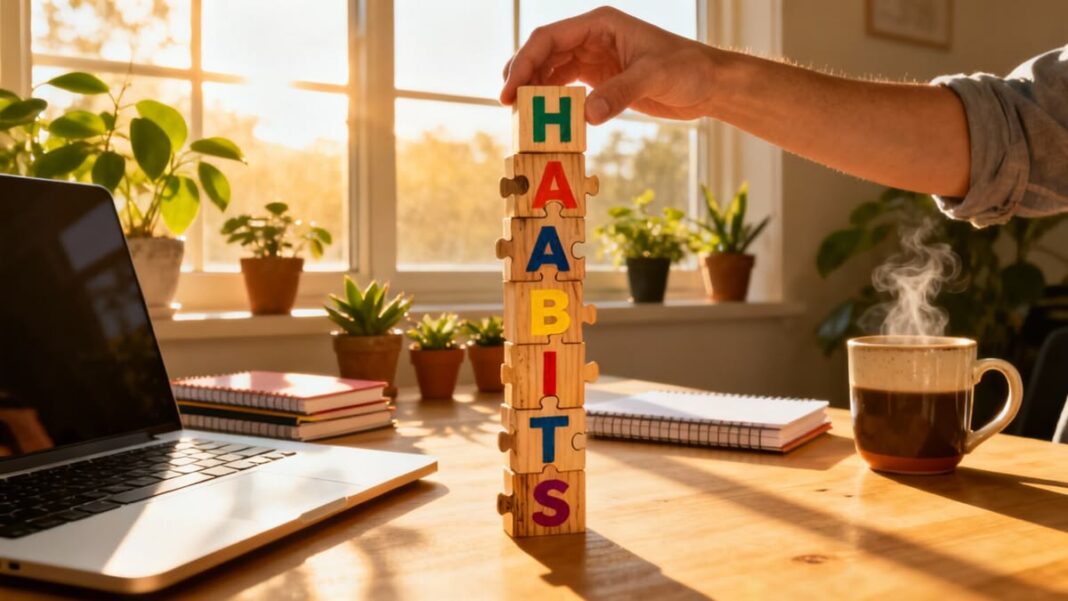

Long-term success is rarely created by one dramatic decision. More often, it develops through small actions repeated consistently over time.
The habits you follow each day influence your productivity, health, finances, relationships, confidence, and personal growth. Positive habits can move you gradually toward meaningful goals, while unhelpful habits can make progress more difficult even when your intentions are good.
Learning how to build better habits for long-term success can help you create routines that support the life you want instead of relying entirely on motivation or willpower.
Better habits do not require perfection. They require consistency, realistic expectations, and systems that make useful behaviors easier to repeat.
When small positive actions become part of your normal routine, long-term improvement becomes much easier to maintain.
What Are Habits?
Habits are behaviors that become easier to repeat because they occur regularly.
Some habits are intentional.
You may choose to exercise each morning, read before bed, plan your day, or save a portion of your income.
Other habits develop without much thought.
You might automatically check your phone after waking up, snack while watching television, or postpone difficult tasks until later.
Habits reduce the amount of decision-making required during the day.
Once a behavior becomes familiar, you often perform it with less conscious effort.
This is why habits can be so powerful.
When useful behaviors become automatic, progress no longer depends entirely on remembering what you should do.
Why Are Good Habits Important for Long-Term Success?
Most meaningful goals require repeated action.
A single workout does not create long-term fitness.
One productive day does not build a successful career.
Saving money once does not create financial security.
Reading one book does not make you an expert.
Success develops when useful actions are repeated often enough to produce cumulative results.
Good habits create that repetition.
They help you continue making progress even when motivation changes.
Over time, small habits can influence major outcomes because the effects of repeated actions accumulate.
Habits Turn Goals Into Daily Action
Goals provide direction.
Habits provide the behavior required to move toward them.
Suppose your goal is to become healthier.
That goal may involve several habits, such as exercising regularly, preparing balanced meals, sleeping consistently, and drinking enough water.
If your goal is professional development, your habits might include reading industry material, practicing a skill, networking, or completing focused work each day.
A goal without supporting habits can remain an intention.
Habits convert the goal into something you actually do.
Why Motivation Alone Is Not Enough
Motivation can be useful when beginning a new goal.
You may feel excited about exercising, learning something new, improving your finances, or becoming more productive.
However, motivation changes.
Some days you feel energetic and focused.
Other days you may feel tired, distracted, or uninterested.
If your habits depend entirely on motivation, consistency becomes difficult.
A strong habit system reduces this dependence.
You create a routine that continues even when excitement disappears.
This is one reason habits are so important for long-term success.
Start With Small Habits
One of the biggest mistakes people make when trying to improve is changing too much at once.
They decide to wake up two hours earlier, exercise every day, completely change their diet, read for an hour, meditate, save more money, and stop using social media simultaneously.
This may feel exciting for several days.
Maintaining everything becomes much harder.
Start smaller.
If you want to read more, begin with a few pages each day.
If you want to exercise, start with a short workout or walk.
If you want to improve your finances, begin by tracking spending or setting up a small regular savings amount.
Small habits are easier to repeat.
Consistency matters more than starting with an impressive routine.
Make Your Habit Specific
Vague goals make habits difficult to follow.
“I want to exercise more” is unclear.
“I will walk for twenty minutes after dinner on Monday, Wednesday, and Friday” is much more specific.
Specific habits answer practical questions.
What will you do?
When will you do it?
Where will it happen?
How long will it take?
The clearer the behavior is, the easier it becomes to follow consistently.
Focus on One Habit at a Time
Trying to build several difficult habits simultaneously can create unnecessary pressure.
Choose one behavior that would make a meaningful difference.
Work on it until it becomes easier.
Then add another.
This approach allows you to concentrate your attention instead of dividing your effort across many changes.
Success with one habit can also build confidence.
You begin to see evidence that you can change your behavior.
That confidence can make future habits easier to develop.
Connect Habits to Existing Routines
A new habit can be easier to remember when connected to something you already do regularly.
For example, you might stretch after brushing your teeth.
You could review your daily priorities after making morning coffee.
You might read after getting into bed.
You could check your budget after receiving your paycheck.
Existing routines become reminders for the new behavior.
This reduces the need to remember the habit separately.
The goal is to make the new action feel like a natural part of your day.
Create a Consistent Time and Place
Habits often become easier when they happen under similar conditions.
If you exercise at a different time every day, you need to repeatedly decide when it will happen.
If you usually exercise at 7 a.m., the decision becomes simpler.
The same principle applies to studying, reading, writing, planning, or meal preparation.
Consistency creates cues.
Your environment begins to remind you what normally happens next.
You do not need perfect scheduling, but some regularity can make habit formation easier.
Make Good Habits Convenient
Environment strongly influences behavior.
If you want to read more, keep a book somewhere visible.
If you want to exercise in the morning, prepare your clothing the night before.
If you want to eat healthier meals, make suitable ingredients easy to access.
If you want to drink more water, keep a bottle near your workspace.
Good habits become easier when they require less effort to begin.
Small environmental changes can sometimes be more effective than relying on willpower.
Make Bad Habits Less Convenient
The opposite approach can help reduce behaviors you want to change.
Add friction.
If social media distracts you, log out of the apps or move them off your home screen.
If you make unnecessary online purchases, remove saved payment information.
If television prevents you from completing evening tasks, keep the remote somewhere less convenient.
If unhealthy snacks are difficult to resist, avoid keeping large quantities immediately available.
Even small barriers can interrupt automatic behavior.
That interruption gives you time to make a more deliberate choice.
Reduce the Size of Difficult Habits
A habit often fails because the expected version is too large.
You may plan to exercise for an hour, read fifty pages, or study for three hours.
When life becomes busy, the habit disappears completely.
Create a minimum version.
Your ideal workout might be forty-five minutes, but your minimum could be ten minutes.
Your ideal study session might be two hours, but your minimum could be twenty minutes.
Completing the smaller version preserves consistency.
You can do more when time and energy allow.
The important thing is avoiding the belief that anything less than the perfect version does not count.
Build Habits Around Your Identity
Habits become more powerful when connected to how you see yourself.
Instead of saying, “I want to read more,” you might think, “I am someone who learns regularly.”
Instead of saying, “I want to become healthier,” you may think, “I take care of my health.”
Instead of saying, “I need to save money,” you might think, “I make thoughtful financial decisions.”
Each repeated action becomes evidence supporting that identity.
This can create stronger motivation than focusing only on one specific outcome.
Use Habit Tracking
Tracking can make progress visible.
You might mark completed habits on a calendar, use a simple notebook, or record them digitally.
The method does not need to be complicated.
Habit tracking can help in several ways.
It reminds you to complete the behavior.
It provides evidence of consistency.
It can also reveal patterns when you struggle.
For example, you may discover that you regularly miss workouts on certain days.
That information allows you to adjust your routine.
Do Not Obsess Over Perfect Streaks
Habit tracking can become counterproductive when maintaining a perfect streak becomes more important than the habit itself.
Real life creates interruptions.
Travel, illness, family responsibilities, unexpected work, or simple mistakes may cause you to miss a day.
One missed day is not a failed habit.
What matters is returning.
Avoid turning a temporary interruption into permanent abandonment.
Long-term consistency matters more than perfect short-term performance.
Follow the Never Miss Twice Principle
A useful mindset is avoiding repeated misses.
Missing one workout may happen.
Try not to miss the next one.
You may skip one planned study session.
Return to the schedule the following day.
This approach prevents one interruption from becoming a new pattern.
You do not need to feel guilty about the first miss.
Simply focus on restarting quickly.
The ability to recover is one of the most important skills in successful habit building.
Celebrate Small Wins
Progress can feel slow when building habits.
Recognizing small achievements helps maintain momentum.
You completed a full week of planned workouts.
You finished reading your first book.
You maintained your budget for a month.
You consistently started work on time.
These achievements may appear small compared with your final goal, but they represent real behavioral change.
Celebrating progress reinforces the belief that your effort is working.
Use Rewards Carefully
Rewards can help reinforce habits.
After completing a milestone, choose something enjoyable.
However, make sure the reward does not directly undermine the habit.
For example, if you are building a savings habit, an expensive unnecessary purchase may not be the most useful reward.
If you are improving your health, a reward that completely contradicts your goal may create mixed signals.
Choose rewards that support enjoyment without weakening progress.
Build a Strong Morning Routine
Morning habits can influence the rest of the day.
A simple routine may include waking at a consistent time, getting ready, reviewing priorities, eating breakfast, exercising, or completing an important task before distractions begin.
Your routine does not need to be complicated.
In fact, an overly ambitious morning routine can become difficult to maintain.
Choose a few activities that genuinely help you begin the day effectively.
The purpose is structure, not perfection.
Create a Helpful Evening Routine
Evening habits can support sleep, organization, and preparation.
You might review tomorrow’s schedule, prepare necessary items, tidy your workspace, reduce screen time, or read before bed.
An evening routine creates closure.
Instead of continuing work or scrolling indefinitely, you create a predictable transition toward rest.
It can also make mornings easier because some decisions have already been made.
Build Better Sleep Habits
Sleep influences energy, concentration, mood, and performance.
A consistent sleep routine can therefore support many other habits.
Try maintaining similar sleep and wake times when possible.
Create a calmer environment before bed.
Reduce unnecessary late-night digital distractions.
Avoid regularly sacrificing sleep to complete low-value activities.
Better sleep can improve your ability to follow through on other important behaviors.
Build Better Exercise Habits
Exercise becomes easier to maintain when it fits naturally into your life.
Choose activities you can realistically continue.
Not everyone needs the same routine.
Walking, cycling, strength training, swimming, sports, or home workouts can all be useful depending on your preferences and circumstances.
Schedule your activity.
Prepare in advance.
Start with manageable sessions.
A routine you can maintain for years is generally more valuable than an extreme program you abandon after several weeks.
Build Better Eating Habits
Healthy eating habits become easier when good choices are convenient.
Plan simple meals.
Keep useful ingredients available.
Avoid waiting until you are extremely hungry to decide what to eat.
Prepare food in advance when helpful.
You do not necessarily need a complicated or restrictive eating system.
Consistent basic habits can make a meaningful difference.
The goal is creating an approach that works with your lifestyle.
Build Better Productivity Habits
Productivity habits help you complete meaningful work consistently.
Begin the day by identifying your most important priorities.
Protect periods for focused work.
Reduce unnecessary notifications.
Group similar tasks.
Prepare for tomorrow before finishing today.
These habits prevent every workday from becoming reactive.
Productivity improves when important actions become part of your routine instead of being repeatedly postponed.
Build Better Financial Habits
Financial success often depends on repeated small decisions.
Useful habits may include reviewing spending, saving regularly, paying bills on time, avoiding unnecessary debt, and planning major purchases.
Automation can be especially helpful.
Setting up regular savings transfers removes the need to make the same decision every month.
Regular financial check-ins can also help you understand whether your habits support your goals.
Build Better Learning Habits
Continuous learning can support long-term personal and professional success.
Create regular time for reading, courses, practice, or skill development.
Small learning sessions can accumulate significantly.
Twenty minutes each day equals more than 120 hours over a year.
The immediate impact may feel small.
The long-term effect can be substantial.
Consistency allows knowledge and skills to compound.
Build Better Work Habits
Professional success often depends on reliability.
Develop habits around preparation, communication, organization, and follow-through.
Begin important projects before deadlines become urgent.
Review your priorities regularly.
Prepare before meetings.
Complete promised work.
Keep learning relevant skills.
These behaviors may seem ordinary, but repeated consistently they can strengthen your professional reputation.
Build Better Relationship Habits
Strong relationships also benefit from consistent habits.
Make time for regular communication.
Listen carefully.
Express appreciation.
Follow through on promises.
Create periods where devices do not interrupt conversations.
Relationships are rarely strengthened through one dramatic gesture.
They usually grow through repeated small actions showing attention and reliability.
Build Better Self-Care Habits
Self-care does not need to involve elaborate routines.
It can include getting enough sleep, exercising, eating regularly, taking breaks, spending time outdoors, maintaining relationships, or protecting quiet time.
Self-care habits create regular opportunities for recovery.
This can make other responsibilities easier to manage.
Long-term success is more sustainable when health and recovery are part of your routine.
Use Your Environment to Support Success
Your surroundings influence your decisions.
A cluttered desk may encourage distraction.
A phone beside your computer makes checking notifications easy.
A kitchen filled with convenient unhealthy food affects eating choices.
Design your environment intentionally.
Place useful tools where you need them.
Remove distractions when possible.
Organize spaces around the behaviors you want to encourage.
A supportive environment reduces the amount of effort required to make good choices.
Use Reminders Strategically
Reminders can help new habits before they become automatic.
Calendar alerts, notes, alarms, or visible objects can provide useful cues.
However, too many reminders can become background noise.
Use them selectively.
A reminder should direct attention toward a specific action.
Once the habit becomes reliable, you may no longer need it.
Plan for Difficult Days
A habit system should work when life is imperfect.
Expect days when your schedule becomes crowded.
Prepare a reduced version of the habit.
If you normally exercise for forty minutes, perhaps you walk for ten.
If you usually study for an hour, perhaps you review notes for fifteen minutes.
If you normally cook dinner, perhaps you maintain a few simple backup meals.
Planning for difficult days prevents the entire routine from disappearing whenever circumstances change.
Identify Your Habit Triggers
Many behaviors begin after a particular trigger.
Stress may lead to unnecessary snacking.
Boredom may lead to social media.
Receiving money may trigger spending.
Feeling overwhelmed may trigger procrastination.
Pay attention to what happens immediately before an unwanted habit.
Once you identify the trigger, you can change your response.
For example, if stress leads to scrolling, you might replace that response with a short walk or another brief activity.
Understanding triggers helps you address the cause rather than only the behavior.
Replace Bad Habits Instead of Only Removing Them
Eliminating a habit creates an empty space.
If you do not decide what will replace it, the old behavior may return.
Suppose you want to reduce evening social media use.
Choose an alternative such as reading, walking, calling a friend, or watching one planned program.
If you want to reduce unnecessary snacking, have another simple routine for breaks.
Replacement behaviors make change more practical.
You are not simply telling yourself what not to do.
You are deciding what to do instead.
Understand Why Bad Habits Feel Rewarding
Unhelpful habits often provide immediate benefits.
Procrastination temporarily removes discomfort.
Social media provides entertainment.
Impulse shopping may create excitement.
Unhealthy convenience food requires little effort.
The negative effects usually appear later.
Good habits often work in the opposite direction.
Exercise may feel uncomfortable now but provide benefits later.
Saving money requires restraint now but creates future security.
Understanding this difference helps explain why habit change can feel difficult.
The challenge is learning to value long-term rewards more consistently.
Avoid All-or-Nothing Thinking
All-or-nothing thinking can destroy good habits.
You may believe that if you cannot complete the perfect workout, there is no point exercising.
If one meal does not fit your plan, you abandon healthy eating for the entire week.
If you miss one productive morning, you decide the day is wasted.
Progress does not require perfection.
A partial effort is often better than no effort.
Flexible consistency is more sustainable than rigid perfectionism.
Review Your Habits Regularly
Not every habit should remain forever.
Your priorities and circumstances change.
A routine that worked when you were a student may not work after starting a full-time job.
A habit that fit your life before becoming a parent may need adjustment later.
Review your routines periodically.
Which habits are helping?
Which ones have become unnecessary?
Which need to change?
A good habit system evolves with your life.
Measure Progress Beyond Immediate Results
Some habits produce results slowly.
You may exercise for several weeks without seeing dramatic changes.
You may save money for months without feeling financially secure.
You may practice a skill without immediately becoming excellent.
Do not judge the habit only by short-term results.
Also measure consistency.
Are you becoming someone who follows through?
Are your routines becoming easier?
Are your decisions improving?
These changes often appear before major external results.
Be Patient With the Process
Habit change takes time.
Some behaviors become easier quickly.
Others require repeated effort for months.
Avoid expecting an exact timeline.
Your environment, personality, routine, difficulty of the habit, and previous behaviors all influence the process.
Focus on repetition rather than speed.
A habit that takes longer to build but remains stable is more valuable than one created quickly and abandoned.
Learn From Failed Habits
If a habit does not last, treat the experience as information.
Ask what happened.
Was the habit too difficult?
Was the time unrealistic?
Did you rely too heavily on motivation?
Were there too many distractions?
Did your environment make the behavior inconvenient?
Use the answers to redesign the habit.
Failure does not necessarily mean you lack discipline.
The system may simply need adjustment.
Avoid Trying to Change Your Entire Identity Overnight
Personal development can become overwhelming when you expect immediate transformation.
You do not need to become a completely different person within a month.
Focus on small improvements.
Every repeated positive action creates evidence of change.
You exercise today.
You save money this week.
You read tonight.
You prepare for tomorrow.
These behaviors gradually influence your identity.
Long-term change often looks ordinary while it is happening.
Use Accountability When Helpful
Some people maintain habits more easily when another person knows about their goals.
You might exercise with a friend.
Study with a classmate.
Work with a coach.
Share progress with someone you trust.
Accountability can create additional motivation.
However, your system should eventually support your own responsibility too.
External accountability works best when combined with internal commitment.
Surround Yourself With Supportive People
Your social environment influences behavior.
If everyone around you regularly practices a habit, that behavior can begin to feel normal.
Spend time with people whose values and routines support your goals.
This does not mean abandoning relationships with anyone who behaves differently.
It simply means recognizing that social influence matters.
Supportive people can encourage progress and make positive behaviors easier to maintain.
Focus on Systems, Not Only Outcomes
Outcomes matter, but they are often influenced by factors outside your control.
Systems focus on repeatable actions.
Instead of concentrating only on losing a certain amount of weight, focus on the routines that support health.
Instead of thinking only about earning a promotion, focus on consistently producing good work and developing relevant skills.
Instead of obsessing over a savings target, build a reliable savings system.
Strong systems increase the likelihood of desirable outcomes.
They also provide something practical to work on every day.
How Habits Build Self-Discipline
Habits and self-discipline strengthen each other.
Discipline helps you repeat a new behavior before it becomes automatic.
Once the habit becomes established, less conscious discipline may be required.
This creates capacity for further improvement.
For example, maintaining a regular exercise schedule may initially be difficult.
Eventually it becomes normal.
You can then direct more attention toward another area.
Small habits can therefore become the foundation for stronger overall discipline.
How Habits Build Confidence
Keeping commitments to yourself can improve confidence.
When you repeatedly follow your routines, you create evidence that you can rely on yourself.
You planned to study, and you studied.
You decided to save, and you saved.
You committed to exercise, and you continued.
This type of confidence is based on experience.
You become more willing to set new goals because you have already demonstrated that you can follow through.
How Habits Reduce Decision Fatigue
Every decision requires mental effort.
Should you exercise today?
When should you study?
Should you prepare lunch?
When should you review your finances?
Established habits reduce these questions.
The decision has already been made.
You know what happens and when.
This leaves more mental energy for situations that genuinely require thought.
Reliable routines make everyday life simpler.
How Habits Support Work-Life Balance
Better habits can help prevent work from controlling your entire schedule.
You might create a consistent end-of-day routine.
You may stop checking professional messages after a certain hour.
You could schedule exercise or family activities regularly.
These habits create boundaries.
Work-life balance becomes easier when personal priorities are protected through routines rather than left to whatever time remains.
How Habits Support Long-Term Success
Long-term success requires persistence.
Habits make persistence more practical.
You do not need to make one enormous effort every few months.
Instead, you make smaller efforts regularly.
Over time, repeated learning improves skills.
Repeated saving improves finances.
Repeated exercise supports health.
Repeated focused work advances professional goals.
The effects accumulate.
This is why seemingly small habits can create significant long-term changes.
Common Habit-Building Mistakes
One common mistake is starting too aggressively.
Another is trying to build too many habits simultaneously.
People also rely heavily on motivation, create unrealistic schedules, and abandon routines after one mistake.
Another problem is focusing only on the final result.
When results do not appear immediately, people assume the habit is not working.
Successful habit building requires patience.
The behavior often needs time before its full benefits become visible.
How to Make Habits Last
Sustainable habits usually share several characteristics.
They are realistic.
They fit your lifestyle.
They have clear triggers.
They are easy enough to repeat.
They provide some form of satisfaction or visible progress.
Most importantly, they are flexible enough to survive difficult days.
A habit that only works when your schedule is perfect is unlikely to last.
Design routines for real life.
A Simple Daily Habit-Building Approach
You do not need a complicated system.
Choose one important habit.
Define exactly what you will do.
Connect it to a regular time or existing routine.
Make the first version easy.
Track whether you complete it.
When you miss, return quickly.
Review the habit after several weeks and adjust if necessary.
This simple process can be applied to productivity, health, finances, learning, and many other areas.
The Long-Term Benefits of Better Habits
Better habits can influence nearly every part of life.
They can improve productivity, health, organization, finances, relationships, confidence, and personal development.
They also reduce the need to repeatedly make the same decisions.
Most importantly, habits allow positive actions to continue long enough for their effects to accumulate.
One day of good behavior may not change much.
Hundreds of consistent days can create a very different outcome.
Final Thoughts
Learning how to build better habits for long-term success is less about finding the perfect routine and more about becoming consistent with useful behaviors.
Start small.
Choose one meaningful habit.
Make it specific.
Connect it to your existing routine.
Reduce the effort required to begin.
Track progress without demanding perfection.
When you miss a day, restart quickly.
Create an environment that supports good decisions and makes unwanted habits less convenient.
Over time, these repeated actions can influence your health, productivity, finances, career, relationships, confidence, and overall quality of life.
Long-term success rarely appears suddenly.
It is usually built gradually through the ordinary actions you choose to repeat.
Frequently Asked Questions About Building Better Habits
What is the best way to build better habits?
Start with one small and specific behavior. Connect it to a regular time or existing routine, make it easy to begin, and repeat it consistently until it becomes more natural.
Why are habits important for long-term success?
Habits create consistent action. Since most meaningful goals require repeated effort over time, positive habits make long-term progress easier to maintain.
How long does it take to build a habit?
There is no universal timeline. Some habits become easier relatively quickly, while more difficult behaviors can take much longer. Consistency is more important than reaching an exact number of days.
How can I make a new habit stick?
Make the habit specific, easy to perform, connected to a clear trigger, and suitable for your lifestyle. Track progress and restart quickly after interruptions.
Why do I keep failing to build habits?
The habit may be too difficult, poorly scheduled, unclear, or dependent on motivation. You may also be trying to change too many behaviors simultaneously. Simplifying the habit can improve consistency.
Should I work on multiple habits at once?
You can, but building one or two important habits at a time is often easier. Once those behaviors become stable, additional habits can be introduced.
How do I stay consistent with good habits?
Create regular cues, prepare your environment, maintain a minimum version for busy days, track progress, and avoid abandoning the habit after one mistake.
What is habit stacking?
Habit stacking involves attaching a new behavior to an existing routine. For example, you might review your daily goals after making your morning coffee.
How can I break bad habits?
Identify what triggers the unwanted behavior, make it less convenient, and choose a healthier replacement. Changing your environment can also reduce temptation.
Why is starting small important?
Small habits require less motivation and are easier to repeat. Once consistency develops, the behavior can gradually be expanded.
How do habits improve productivity?
Productive habits create structure around important work. Planning, focusing, reducing distractions, and preparing in advance can become routine behaviors that make work easier to manage.
How can I build better morning habits?
Choose a few simple activities that help you begin the day effectively. Prepare in advance, maintain a consistent wake time when possible, and avoid creating an overly complicated routine.
How can I develop better financial habits?
Review spending regularly, automate savings where appropriate, pay bills on time, plan purchases, and create a realistic budget that fits your income and priorities.
Can habits improve self-confidence?
Yes. Consistently keeping commitments to yourself can build self-trust. Over time, completed habits provide evidence that you can follow through on your goals.
How can I recover after breaking a habit?
Avoid treating one mistake as complete failure. Identify what caused the interruption and return to the habit as soon as possible.
What should I do when motivation disappears?
Reduce the size of the habit and focus on completing the minimum version. Strong habits should eventually depend more on routine than on temporary motivation.
Is habit tracking necessary?
No, but it can be helpful. Tracking provides reminders, makes progress visible, and helps identify patterns when consistency becomes difficult.
How can I make good habits easier?
Prepare your environment in advance. Keep necessary tools visible, remove unnecessary barriers, and connect the habit to a convenient time and place.
How do I stop all-or-nothing thinking when building habits?
Accept partial progress. A shorter workout, smaller study session, or simpler routine still supports consistency. Long-term improvement does not require perfect performance.
What is the difference between a goal and a habit?
A goal describes an outcome you want to achieve. A habit is a repeated behavior that can help move you toward that outcome.
Can good habits improve work-life balance?
Yes. Habits around planning, work boundaries, exercise, sleep, family time, and digital use can create a more sustainable balance between professional and personal responsibilities.
What habits are most important for success?
The most useful habits depend on your goals, but consistent planning, focused work, learning, sleep, exercise, financial management, and maintaining important relationships can all support long-term success.
How do I know whether a habit is working?
Look at both the outcome and the consistency of the behavior. Even if major results have not appeared yet, a habit may be working if you are following it more reliably and finding it easier to maintain.
Should I reward myself for completing habits?
Rewards can help, particularly during the early stages. Choose rewards that provide satisfaction without directly undermining the goal you are working toward.
How can I make habits work during busy periods?
Create a smaller minimum version of each important habit. This helps preserve consistency when you do not have enough time or energy for the full routine.
Why are systems important for habit building?
Systems create the environment, schedule, reminders, and routines that support behavior. A strong system makes good habits easier to repeat without relying entirely on willpower.
Can small habits really create major results?
Yes. Small actions may appear insignificant in the short term, but repeated consistently over months or years they can accumulate into meaningful changes.
What is the key to building habits that last?
The key is sustainable consistency. Choose habits that fit your real life, make them easy enough to repeat, and continue improving them gradually instead of expecting perfect results immediately.