


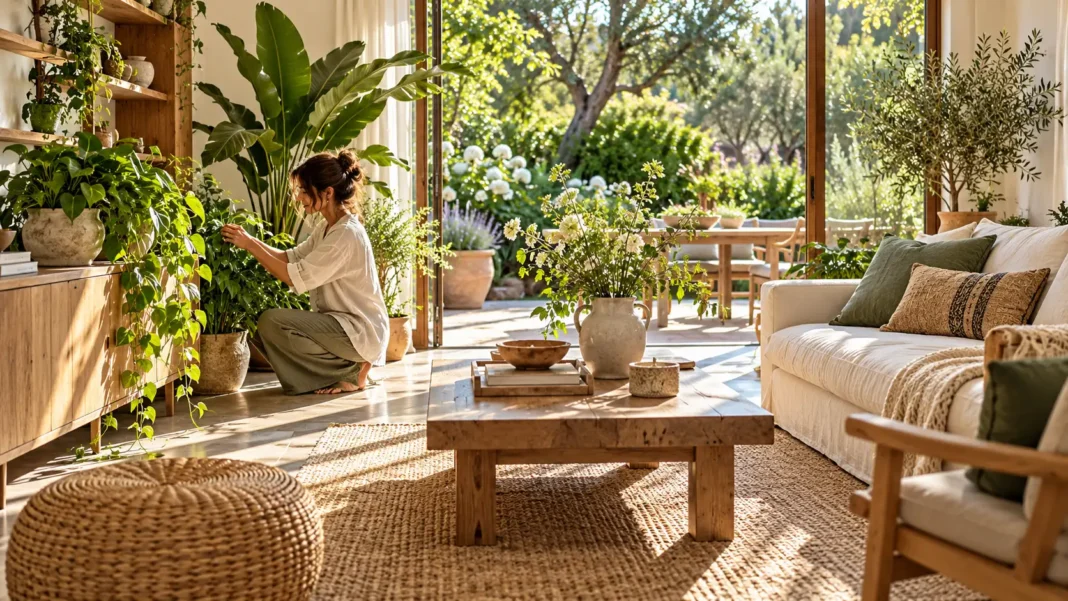

Let Natural Light Into Your Rooms
Natural light is one of the simplest ways to make a home feel connected to the outdoors. Open curtains during the day, keep windowsills clear, and arrange furniture so it does not block the brightest parts of a room. Even small changes can make a space feel more open and reveal the changing light throughout the day.
Use light-colored curtains or sheer panels when you want privacy without making a room feel dark. A mirror placed across from a window can help spread daylight into a nearby area. If a room has limited natural light, choose warm lamps and avoid relying on heavy window coverings that keep the space dim.
Pay attention to how sunlight shifts from morning to evening. A sunny spot might be comfortable for reading in the morning but too bright later in the day. Adjust blinds or curtains as needed, and position seating where you can enjoy daylight without glare on screens or direct sun on delicate furnishings.
Add Indoor Plants to Everyday Spaces
Indoor plants bring living color, varied textures, and a sense of growth into a home. You do not need a large collection to make a difference: one leafy plant beside a chair or a small pot on a shelf can soften a room. Choose plants according to the light and care you can provide.
For an easy start, consider hardy varieties such as pothos or snake plants, then check the needs of the specific plant you choose. Some prefer brighter light, while others can adapt to lower-light spots. Match plants to their locations instead of placing every pot wherever it looks attractive.
Think about plant size and placement as you decorate. A tall floor plant can make an empty corner feel more inviting, while smaller plants can add detail to shelves or tables. Leave enough room for growth and watering, and keep pots away from busy walkways where they could be bumped.
Choose Natural Materials and Textures
Natural materials can add a grounded feel to rooms, even when you do not have space for many plants. Wood furniture, woven baskets, linen curtains, cotton throws, and stone or clay accessories bring different textures into a space. Small changes, such as adding a woven rug or wooden tray, can make a room feel warmer.
Mix textures rather than trying to match every item. A smooth wooden surface can pair well with a soft cotton cushion, while a woven basket can balance a polished table. This variety gives the room visual interest and helps natural details feel like part of the design rather than a theme.
When choosing materials, think about how they will work in daily life. A washable cotton cover may be a better choice for a busy family room than a delicate fabric. You can bring nature indoors in practical ways, selecting finishes and furnishings that suit your routines as well as your style.
Bring Outdoor Views Into Focus
A view of trees, plants, sky, or even a small garden can make a room feel connected to the outdoors. Arrange seating so it faces a window when possible, and keep the area around it tidy. You can also use a low bench or a small table near the window to make the view part of daily life.
If the view is limited, add a few plants near the window or place a nature-inspired print where you can see it from your favorite seat. These touches will not replace a garden, but they can introduce color and shapes that echo the natural world. Choose artwork that feels calm and personal.
Avoid covering every window with bulky furniture or dense curtains. At the same time, consider privacy, temperature, and glare when deciding how much light to let in. A simple shade or sheer panel can soften strong daylight while still letting you enjoy the changing sky and outdoor scenery.
Use Nature-Inspired Colors
Colors drawn from nature can make a home feel calm and welcoming. Soft greens, warm browns, sandy beige, muted blues, and earthy terracotta are easy to combine with neutral walls and furniture. You can use these shades on a large surface, such as an accent wall, or introduce them in cushions and smaller accessories.
Start with a color that already appears in your home, such as the green of a plant or the warm tone of a wooden floor. Repeat it in a few places to create a sense of connection across the room. A limited palette can feel cohesive without making every item look identical.
Consider the amount of daylight a room receives before choosing paint or fabric colors. A shade may appear brighter in a sunny room and more muted in a darker one. Test a small sample where you plan to use it, then look at it at different times of day before making a bigger change.
Add Nature-Inspired Art and Objects
Artwork can bring the look of the outdoors into places where living plants may not thrive. Botanical prints, landscape photographs, and illustrations of leaves, flowers, or birds can add natural detail to a wall. Choose images that suit the room’s mood, whether you prefer a peaceful landscape or a colorful close-up of foliage.
Display objects made from or inspired by natural forms, such as a wooden bowl, a piece of driftwood, or a shell collected on a trip. A few meaningful items can create a personal connection to nature without filling every shelf. Leave some open space so each piece has room to stand out.
You can also rotate natural objects with the seasons. A branch in a vase, a small arrangement of dried grasses, or a bowl of pinecones can change the feel of a room without a major redesign. Keep decorative items stable and place them where they will not be knocked over or exposed to damaging sunlight.
Create a Small Herb or Kitchen Garden
A kitchen herb garden can bring fresh greenery into a practical part of the home. A few pots of herbs on a bright windowsill may be enough to add color and make fresh leaves easy to reach while cooking. Choose herbs that suit your meals and check that the spot offers enough light for them.
If your windowsill is narrow, use a small tray to keep pots together or place a compact planter on a nearby shelf. Make sure water can drain without damaging the surface. Use containers that are easy to move when cleaning, and avoid putting plants beside a hot stove or in a spot where cooking splashes may reach them.
Keep the garden manageable by starting with a small number of plants. Labeling pots can help you remember which herb is which, especially when several leaves look similar. Remove dead leaves, check the soil before watering, and harvest only what you need so the plants remain attractive as well as useful.
Make the Most of a Balcony or Patio
A balcony, patio, or doorstep can act as a bridge between indoor and outdoor living. Add a comfortable chair, a few suitable pots, and a place to set down a drink or book. Even a compact outdoor area can feel like a retreat when it is arranged for the way you want to use it.
Choose plants that suit the amount of sun, wind, and space available. Use sturdy containers that will not tip easily, and check whether the surface needs protection from water. If your outdoor area is shaded, select plants that can tolerate those conditions rather than choosing varieties that need long hours of direct sunlight.
Keep the transition between indoors and outdoors simple. A nearby basket for garden tools or a washable mat by the door can make the space easier to maintain. Opening the door or nearby window when the weather permits can also make a small home feel more connected to fresh air and outdoor sounds.
Welcome Natural Sounds and Scents
Nature enters a home through more than what you see. Opening a window can let in birdsong, rustling leaves, or the sound of rain, depending on your surroundings. When outdoor noise or weather makes that uncomfortable, a quiet nature recording can provide gentle background sound while you read, cook, or rest.
Fresh herbs, flowers, or citrus can add natural scents to your home in simple ways. Place a small vase of seasonal flowers on a table or keep fresh herbs in the kitchen. Choose mild scents that you enjoy, and use them in moderation so they do not overwhelm the room.
Keep scent choices comfortable for everyone who shares the space. Strong fragrances may bother some people, and scented products can linger longer than expected in small rooms. Ventilate the area when possible, and remember that fresh air, clean fabrics, and a small plant can make a room feel pleasant without adding fragrance.
Build Small Nature-Based Habits
Nature can become part of your home through everyday routines, not just decoration. Spend a few minutes watering plants, opening the curtains, or sitting by a window without a screen. These small actions encourage you to notice sunlight, weather, and changes in the plants around you.
Try bringing home one seasonal natural detail at a time. You might pick up a bunch of flowers, display a branch from your garden, or swap a cushion cover for a color that reflects the season. Keeping changes simple makes it easier to enjoy them and prevents the home from feeling crowded.
Make your nature-inspired choices easy to maintain. Place a watering can near your plants, keep a small cloth handy for dusty leaves, and choose decorations that do not need constant attention. When greenery and natural materials fit into your routine, they are more likely to remain a comfortable part of your home.
Conclusion
Bringing more nature into your home does not require a garden or a complete makeover. Natural light, a few well-chosen plants, and materials such as wood, cotton, and woven fibers can add an outdoor feel to rooms of any size. Start with the changes that suit your space and daily routines.
Use colors, views, art, and natural textures to create a connection with the outdoors throughout your home. A windowsill herb garden or a comfortable balcony chair can add both beauty and purpose. Keep each choice practical by considering light, maintenance, and how you use the room.
Begin with one small change and notice how it affects the space. You might move a chair toward the window, add a plant, or bring in a nature-inspired color. With a few thoughtful choices, your home can feel more welcoming and connected to the natural world.
FAQs
How can I bring nature into my home without buying many plants?
Let in more daylight, use natural materials such as wood and cotton, and display nature-inspired art. A small herb pot or seasonal flowers can add greenery without needing a large plant collection.
What are easy indoor plants for beginners?
Pothos and snake plants are common beginner-friendly choices, but their needs still vary by variety and home conditions. Check the plant’s light and watering requirements before choosing a spot.
How can I make a small home feel more connected to nature?
Keep windows clear, use a few natural textures, and add compact plants where they can receive suitable light. Nature photography, earthy colors, and a tidy windowsill can also make a small room feel more inviting.
What natural materials can I use in home décor?
Wood, cotton, linen, jute, rattan, clay, and stone can add natural texture to a room. Choose materials that fit your style and are practical to clean and maintain.
How do I bring nature into a home with little natural light?
Use nature-inspired colors, artwork, and natural materials, then choose plants suited to lower-light conditions if you want greenery. A grow light may help some plants, but check the plant’s needs before relying on one.