



Transportation is one of the most important parts of modern society, connecting people to jobs, education, businesses, healthcare, and communities. However, conventional transportation systems have historically depended heavily on petroleum-based fuels, creating challenges related to air pollution, greenhouse gas emissions, energy security, and urban congestion.
Electric vehicles (EVs) are emerging as an important part of the transition toward more sustainable transportation. Advances in batteries, charging infrastructure, vehicle technology, and renewable energy are making electric mobility increasingly practical.
According to the International Energy Agency, global electric car sales exceeded 17 million in 2024, representing more than 20% of total car sales. The IEA projected that global electric car sales could exceed 20 million in 2025, although the pace of adoption differs considerably between markets.
The future of transportation, however, will involve more than replacing gasoline-powered cars with electric ones. Public transportation, cycling, walking, shared mobility, intelligent traffic systems, and renewable energy will all play important roles.
What Are Electric Vehicles?
Electric vehicles use electric motors for propulsion rather than relying exclusively on internal-combustion engines.
Battery-electric vehicles use rechargeable batteries to store electricity. Plug-in hybrid vehicles combine an electric powertrain with an internal-combustion engine and can be charged externally.
Electric buses, trucks, motorcycles, scooters, and other forms of transportation are also expanding.
The growth of different electric vehicle categories means electrification is gradually extending beyond passenger cars.
Why Electric Vehicles Matter
One major advantage of electric vehicles is that they produce no tailpipe emissions while operating in electric mode.
This can be particularly valuable in cities, where traffic-related pollution can affect air quality.
The overall environmental benefit of an EV also depends on how electricity is generated and on the emissions associated with manufacturing batteries and vehicles. As electricity systems become cleaner, the potential climate benefits of electric transportation can increase.
The Rapid Growth of EV Adoption
Electric vehicle adoption has expanded significantly over the past decade.
The IEA’s 2025 outlook estimates that under its stated-policies scenario, the global EV fleet across road transport modes excluding electric two- and three-wheelers could reach about 250 million vehicles by 2030, roughly four times the level at the end of 2024.
This growth will not occur at the same rate everywhere. Government policies, vehicle prices, charging availability, electricity infrastructure, consumer preferences, and local manufacturing capabilities all influence adoption.
Battery Technology Is Transforming Transportation
The battery is one of the most important components of an electric vehicle.
Modern lithium-ion batteries have become more energy-dense and affordable, helping manufacturers produce vehicles with longer driving ranges.
Research is also exploring new battery chemistries and materials that could improve charging speed, durability, safety, energy density, and cost.
Future improvements in battery technology could make EVs more practical for consumers who currently have concerns about range or charging time.
Faster EV Charging
Charging infrastructure is essential for widespread EV adoption.
Home charging remains the preferred method for many EV owners because it is convenient and can take place while the vehicle is parked. However, public charging is particularly important for people without private parking and for long-distance travel.
Global public charging infrastructure is expanding rapidly. The IEA reports that more than 1.3 million public charging points were added worldwide in 2024, bringing the global total to more than 5 million.
Fast charging technology is also improving, potentially reducing the time required for long-distance travel.
The Future of Ultra-Fast Charging
One of the most important developments in EV technology is the improvement of charging speeds.
New battery and charging systems are being designed to deliver significantly more energy within a short period. The IEA notes that several manufacturers have demonstrated major improvements in fast-charging performance, including systems capable of adding hundreds of kilometers of claimed range within minutes under suitable conditions.
However, extremely high-power charging also creates challenges for electricity grids. Charging stations may require significant electrical capacity, grid upgrades, and potentially energy-storage systems.
The Importance of Renewable Energy
Electric vehicles are most environmentally beneficial when the electricity used to charge them comes from low-carbon sources.
Solar, wind, hydropower, geothermal, and other renewable sources can help reduce the emissions associated with electricity generation.
This means the future of sustainable transportation is closely connected to the future of clean energy.
A city with electric vehicles but electricity generated primarily from high-emission sources may achieve different environmental results from a city powered largely by renewable energy.
Smart Charging
Smart charging can help coordinate when EVs consume electricity.
Instead of charging every vehicle at maximum power immediately after it is connected, smart systems can adjust charging based on electricity demand, energy prices, renewable generation, and grid conditions.
This could reduce pressure on electricity networks and make better use of renewable energy.
Vehicle-to-Grid Technology
Electric vehicles can potentially become more than consumers of electricity.
Vehicle-to-grid technology allows compatible vehicles to send electricity back to the grid under appropriate conditions.
When large numbers of EVs are connected, their batteries could potentially provide additional flexibility to electricity systems.
The IEA notes that China has policies supporting vehicle-to-grid development and expects EVs to provide around 10 GW of flexible capacity by 2030 in its stated-policies scenario.
Electric Public Transportation
Electric mobility is not limited to private cars.
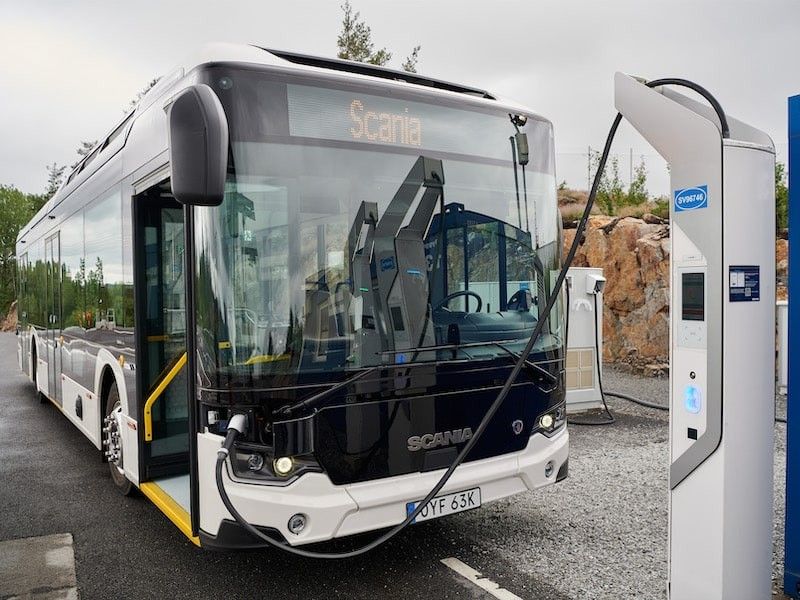
Electric buses are becoming increasingly important, particularly in urban areas where vehicles operate frequently and return to depots for charging.
Electric buses can reduce local tailpipe pollution and noise while supporting cleaner public transportation.
The IEA expects the global electric bus sales share to approach 75% by 2030 in its stated-policies scenario.
Electric Trucks and Commercial Vehicles
Commercial transportation presents both an opportunity and a challenge for electrification.
Delivery vans, city trucks, and other commercial vehicles often follow predictable routes, making them suitable candidates for planned charging.
Heavy-duty long-distance trucks are more difficult because they require large batteries and rapid charging.
Advances in battery technology and high-power charging could make electric freight transportation increasingly practical.
Electric Two- and Three-Wheelers
Electric motorcycles, scooters, and three-wheelers are particularly important in many developing and densely populated markets.
They require less energy than passenger cars and can be relatively inexpensive to operate.
The IEA expects the global stock of electric two- and three-wheelers to continue expanding substantially through 2030.
For some cities, electrifying two- and three-wheelers may provide an especially effective pathway toward cleaner urban transportation.
Sustainable Public Transportation
Electric vehicles alone cannot solve every transportation problem.
A sustainable transportation system should also encourage buses, trains, walking, cycling, and other shared mobility options.
If every person replaces a gasoline car with an electric car but roads remain congested and cities remain dependent on private vehicles, many transportation challenges will continue.
The most sustainable approach combines electrification with efficient urban planning and strong public transportation.
The Rise of Shared Mobility
Ride-sharing, car-sharing, bike-sharing, and scooter-sharing services are changing how people access transportation.
Shared mobility can potentially reduce the need for private vehicle ownership when services are convenient and well integrated with public transportation.
Electric shared vehicles can further reduce the environmental impact of urban mobility.
Autonomous Electric Vehicles
Autonomous driving technology could eventually transform transportation.
Self-driving electric vehicles could potentially improve road safety, increase mobility for people unable to drive, and optimize transportation networks.
However, fully autonomous transportation still faces technological, regulatory, infrastructure, cybersecurity, and public-acceptance challenges.
Its long-term impact remains uncertain.
Electric Vehicles and Urban Planning
The growth of EVs also requires cities to rethink infrastructure.
Charging stations may need to be incorporated into apartment buildings, workplaces, parking facilities, shopping centers, highways, and public spaces.
Urban planning will also need to consider electricity capacity and equitable access to charging.
People who live in apartments or lack private parking should not be excluded from the benefits of electric mobility.
The Challenge of Battery Materials
EV batteries require minerals and other raw materials.
The growing demand for batteries therefore creates questions about mining, supply chains, environmental impacts, processing capacity, and geopolitical dependence.
Responsible sourcing and improved battery technologies will be important for making the EV industry more sustainable.
Battery Recycling
Battery recycling can help recover valuable materials and reduce waste.
As more EV batteries reach the end of their useful automotive lives, recycling infrastructure will become increasingly important.
Some batteries may also be repurposed for stationary energy storage before being recycled.
Developing effective battery-recycling systems can help create a more circular transportation economy.
Lowering the Cost of Electric Vehicles
Vehicle affordability remains an important factor in EV adoption.
Battery prices have declined substantially over time, contributing to improved EV economics. However, prices vary by market and vehicle category.
More affordable models could make electric transportation accessible to a much broader group of consumers.
The expansion of competition and manufacturing capacity may also influence future prices.
Electric Vehicles and Total Cost of Ownership
Purchase price is only one part of vehicle economics.
EV owners may benefit from lower energy and maintenance costs because electric drivetrains have fewer moving components than conventional engines.
However, actual savings depend on electricity prices, fuel prices, maintenance requirements, insurance, vehicle prices, driving patterns, and local conditions.
Consumers should therefore evaluate total ownership costs rather than comparing purchase prices alone.
Government Policies and EV Adoption
Government policies can significantly influence transportation markets.
Examples include emissions standards, purchase incentives, charging infrastructure investments, taxation policies, fuel regulations, and public transportation programs.
The IEA emphasizes that policy and economic conditions remain important sources of uncertainty in the global EV outlook.
Long-term consistency can help manufacturers, infrastructure providers, and consumers make investment decisions.
The Role of Businesses
Businesses will play a major role in sustainable transportation.
Companies can electrify delivery fleets, install workplace charging, encourage employees to use public transportation, and optimize logistics.
Large commercial fleets can accelerate EV adoption because fleet operators often make purchasing decisions based on operating costs and predictable vehicle usage.
Sustainable Transportation Beyond Cars
The future of sustainable transportation should include more than electric cars.
Railways, electric buses, bicycles, walking, electric scooters, shared mobility, and improved logistics can all contribute to more efficient transportation systems.
Urban areas may benefit most from combining multiple transportation options rather than relying on a single technology.
Challenges Facing the EV Industry
Despite rapid progress, electric transportation still faces challenges.
These include charging availability, battery-material supply chains, affordability, electricity-grid capacity, extreme-weather performance, recycling, consumer concerns, and uneven infrastructure development.
Some markets are advancing much faster than others.
The future will depend on addressing these challenges while maintaining consumer confidence and investment.
The Future of Sustainable Transportation
The transportation system of the future is likely to be increasingly electric, connected, shared, and data-driven.
Vehicles may communicate with charging networks, electricity grids, traffic systems, and other vehicles.
Artificial intelligence could optimize routes and energy consumption, while renewable energy could provide an increasing share of electricity.
Public transportation and active mobility will remain important because sustainable transportation is ultimately about moving people and goods efficiently rather than simply replacing one type of vehicle with another.
Conclusion
The future of electric vehicles and sustainable transportation is closely connected to developments in batteries, charging infrastructure, renewable energy, public transportation, smart grids, and urban planning.
Electric vehicles are already becoming an important part of global transportation, and current projections suggest continued growth through the end of the decade.
However, a truly sustainable transportation system requires a broader approach. Electric cars can reduce tailpipe emissions, but cities also need reliable public transportation, safe cycling infrastructure, walkable neighborhoods, efficient freight systems, renewable electricity, and responsible resource management.
The ultimate goal should not simply be to replace gasoline vehicles with electric vehicles. It should be to create transportation systems that are cleaner, more efficient, affordable, accessible, and resilient for future generations.
Frequently Asked Questions
What is the future of electric vehicles?
Electric vehicles are expected to become an increasingly important part of global transportation as battery technology improves, charging networks expand, and more countries introduce policies supporting vehicle electrification.
Are electric vehicles environmentally friendly?
EVs produce no tailpipe emissions while operating in electric mode. Their overall environmental impact also depends on electricity generation, vehicle manufacturing, battery production, and recycling.
Will EV charging become faster?
Charging technology is developing rapidly. New battery and charging systems are reducing charging times, although the speed available to consumers depends on the vehicle, charger, battery conditions, and electricity infrastructure.
Will electric vehicles replace all gasoline cars?
Electric vehicles are likely to become much more common, but the pace of replacement will vary by country, vehicle category, infrastructure, policy, and consumer preferences.
What role will renewable energy play in electric transportation?
Renewable electricity can reduce the emissions associated with charging EVs and make electrified transportation more environmentally sustainable.
Why is charging infrastructure important?
Reliable charging infrastructure allows EV owners to recharge conveniently at home, workplaces, public locations, and along highways. It is particularly important for people without private parking or home charging.
What is vehicle-to-grid technology?
Vehicle-to-grid technology allows compatible EVs to send stored electricity back to the electricity grid, potentially allowing vehicles to provide additional flexibility to energy systems.
Are electric buses part of sustainable transportation?
Yes. Electric buses can reduce local tailpipe emissions and are particularly suitable for urban routes and fleet operations where charging can be centrally managed.
What happens to old EV batteries?
EV batteries can potentially be reused for stationary energy-storage applications before being recycled to recover valuable materials.
What will sustainable transportation look like in the future?
It will likely combine electric vehicles, renewable energy, public transportation, walking, cycling, shared mobility, smart charging, connected infrastructure, and increasingly intelligent transportation systems.