


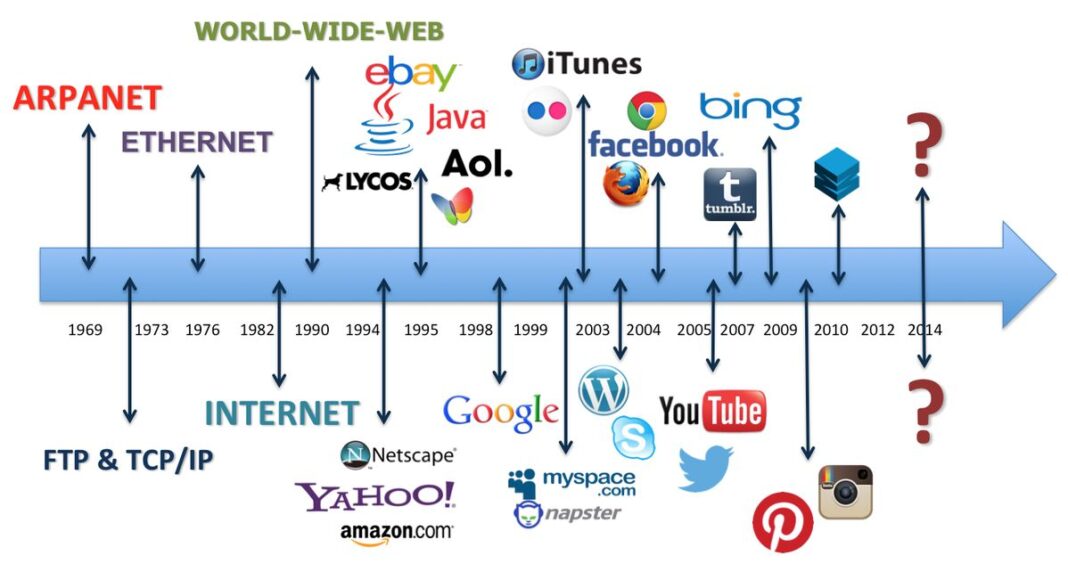

The internet is one of the most influential inventions in human history. It has transformed the way people communicate, learn, work, shop, conduct business, and access information. What began as a small research network connecting a handful of computers has grown into a global infrastructure that connects billions of people and devices.
The internet continues to evolve through advancements in artificial intelligence (AI), cloud computing, high-speed broadband, mobile technology, and the Internet of Things (IoT). Understanding its history helps explain how modern digital technologies emerged and where the internet may be heading in the future.
What Is the Internet?
The internet is a global network of interconnected computer systems that communicate using standard networking protocols. It enables devices around the world to exchange data, access websites, send emails, stream media, and use countless online services.
Rather than being owned by a single organisation, the internet is made up of many interconnected networks operated by governments, businesses, universities, and internet service providers.
The Early Foundations
The origins of the internet can be traced back to the 1960s when researchers began exploring methods of connecting computers over long distances.
One of the key developments was packet switching, a method of breaking data into small packets that could travel independently across a network before being reassembled at their destination. This innovation made digital communication more reliable and efficient.
These early concepts laid the groundwork for the modern internet.
ARPANET: The First Computer Network
In 1969, researchers launched ARPANET, one of the first packet-switched computer networks.
Initially connecting a small number of research institutions, ARPANET demonstrated that computers in different locations could successfully communicate over a shared network. It became the foundation upon which today’s internet was built.
Throughout the 1970s, more universities and research organisations joined the network, expanding its capabilities.
The Development of TCP/IP
As computer networks grew, a common communication standard became necessary.
The introduction of the Transmission Control Protocol (TCP) and Internet Protocol (IP) allowed different networks to communicate with one another using shared rules.
In 1983, TCP/IP became the standard networking protocol for ARPANET, marking a major milestone in the creation of the modern internet.
The Birth of the World Wide Web
Although the internet already existed, it was still difficult for most people to use.
In 1989, computer scientist Tim Berners-Lee proposed the World Wide Web, a system that allowed documents to be linked together through hyperlinks and accessed using web browsers.
The World Wide Web introduced technologies such as:
- Hypertext
- Web browsers
- Web servers
- HTML (HyperText Markup Language)
- URLs (Uniform Resource Locators)
These innovations made the internet much more accessible to the public.
The Internet Goes Mainstream
During the 1990s, internet access expanded rapidly.
Several developments contributed to its popularity:
- Personal computers became more affordable.
- Commercial internet service providers emerged.
- User-friendly web browsers were introduced.
- Businesses began creating websites.
- Email became widely adopted.
The internet quickly evolved from an academic tool into an essential part of everyday life.
The Rise of Search Engines
As the number of websites increased, finding information became more challenging.
Search engines were developed to organise online content and help users locate information quickly.
Over time, search technology improved through:
- Better indexing
- Ranking algorithms
- Personalised search
- Voice search
- AI-powered search experiences
Today, search engines are among the most frequently used internet services.
E-Commerce and Online Business
The internet revolutionised global commerce.
Businesses began selling products and services online, creating entirely new industries.
Digital commerce introduced:
- Online shopping
- Electronic payments
- Digital marketing
- Online banking
- Subscription services
- Global marketplaces
Companies of all sizes now rely on the internet to reach customers worldwide.
Social Media and Digital Communication
The internet dramatically changed how people communicate.
Modern online communication includes:
- Social networking platforms
- Instant messaging
- Video conferencing
- Online communities
- Live streaming
- Content sharing
These technologies have connected people across borders while creating new opportunities for education, collaboration, and entertainment.
Mobile Internet Revolution
The widespread adoption of smartphones transformed internet usage.
Mobile internet enabled users to:
- Browse websites anywhere
- Use navigation services
- Stream videos
- Access cloud storage
- Shop online
- Communicate instantly
Today, mobile devices account for a significant share of global internet traffic.
Cloud Computing and Digital Services
Cloud computing changed how organisations manage technology.
Instead of relying solely on local computers, businesses now use cloud platforms to:
- Store data
- Run applications
- Support remote work
- Scale computing resources
- Improve disaster recovery
Cloud technology has become a foundation of modern digital infrastructure.
Artificial Intelligence and the Modern Internet
Artificial intelligence is reshaping the internet in many ways.
AI powers:
- Search engines
- Personalised recommendations
- Chatbots and virtual assistants
- Fraud detection
- Language translation
- Content moderation
As AI continues to improve, it is expected to make online experiences more personalised and efficient.
Challenges Facing the Internet
Despite its enormous benefits, the internet also presents significant challenges.
Key issues include:
- Cybersecurity threats
- Data privacy concerns
- Online misinformation
- Digital inequality
- Identity theft
- Network resilience
Governments, businesses, and technology providers continue working to address these issues while maintaining an open and secure internet.
The Future of the Internet
The next generation of internet technologies is expected to include:
- Faster 6G mobile networks
- Quantum networking research
- AI-powered digital services
- Expanded Internet of Things (IoT)
- More immersive virtual and augmented reality experiences
- Stronger cybersecurity technologies
- Greener and more energy-efficient infrastructure
These developments may further transform how people connect, communicate, and conduct business.
Conclusion
The internet has evolved from a small research project into one of the world’s most important technological achievements. Its development has revolutionised communication, commerce, education, healthcare, entertainment, and countless other aspects of modern life.
As emerging technologies such as artificial intelligence, cloud computing, quantum networking, and the Internet of Things continue to advance, the internet will remain a driving force behind innovation and global connectivity. Understanding its history not only highlights how far technology has progressed but also offers valuable insight into the digital future.
Frequently Asked Questions (FAQs)
1. What is the internet?
The internet is a global network of interconnected computer systems that enables devices to communicate, share information, and access online services using standard networking protocols.
2. What was ARPANET?
ARPANET was one of the first packet-switched computer networks, launched in 1969. It served as the foundation for the development of the modern internet.
3. What is the difference between the internet and the World Wide Web?
The internet is the global network that connects computers and devices, while the World Wide Web is a service that uses the internet to provide access to interconnected web pages through browsers.
4. How has the internet changed business?
The internet has enabled e-commerce, digital marketing, online banking, cloud computing, remote work, global communication, and new business models that connect organisations with customers worldwide.
5. What are the biggest challenges facing the internet today?
Major challenges include cybersecurity threats, data privacy, misinformation, digital inequality, online fraud, and maintaining secure and reliable global infrastructure.
6. What is the future of the internet?
Future developments are expected to include faster mobile networks, greater AI integration, quantum networking research, expanded IoT ecosystems, immersive digital experiences, stronger cybersecurity, and more sustainable internet infrastructure.