


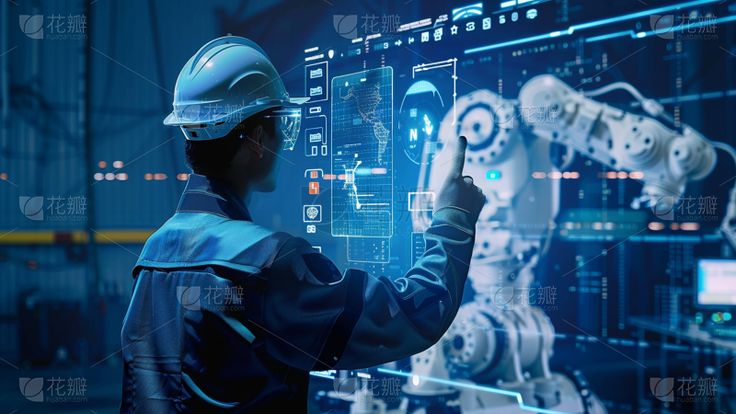
 has become one of the most influential technologies driving digital transformation across the global economy.)
Machine Learning (ML) has become one of the most influential technologies driving digital transformation across the global economy. As a branch of artificial intelligence (AI), machine learning enables computers to learn from data, identify patterns, and make predictions without being explicitly programmed for every task. Businesses are increasingly adopting ML to improve efficiency, reduce costs, enhance customer experiences, and gain a competitive advantage.
From healthcare and finance to manufacturing, retail, agriculture, and transportation, machine learning is revolutionising how industries operate. As computing power, cloud infrastructure, and data availability continue to improve, machine learning is expected to play an even greater role in shaping the future of business and innovation.
What Is Machine Learning?
Machine learning is a type of artificial intelligence that allows computer systems to learn from data and improve their performance over time.
Instead of relying solely on fixed programming rules, machine learning algorithms analyse historical information, recognise patterns, and generate predictions or recommendations. The more quality data these systems process, the better they become at solving specific tasks.
How Machine Learning Works
Machine learning models follow a structured process.
First, large amounts of relevant data are collected and prepared. The algorithm is then trained using this data to identify relationships and patterns. After training, the model is tested to measure its accuracy before being deployed to perform real-world tasks.
As new data becomes available, many machine learning systems continue learning and improving their performance.
Types of Machine Learning
Machine learning includes several different approaches.
Supervised Learning
Supervised learning uses labelled data where the correct answers are already known. It is commonly used for fraud detection, email filtering, and sales forecasting.
Unsupervised Learning
Unsupervised learning analyses unlabelled data to discover hidden patterns or customer segments. Businesses often use it for market research and recommendation systems.
Reinforcement Learning
Reinforcement learning enables systems to improve through trial and error by receiving rewards for successful actions. It is widely used in robotics, autonomous vehicles, and advanced gaming applications.
Machine Learning in Healthcare
Healthcare has become one of the fastest-growing sectors for machine learning adoption.
Machine learning helps healthcare providers:
- Detect diseases earlier
- Analyse medical images
- Predict patient risks
- Personalise treatment plans
- Accelerate drug discovery
- Improve hospital resource planning
These capabilities support better clinical decisions while improving patient outcomes.
Machine Learning in Finance
Financial institutions use machine learning to improve security and efficiency.
Applications include:
- Fraud detection
- Credit risk assessment
- Investment analysis
- Customer service automation
- Algorithmic trading
- Anti-money laundering monitoring
By analysing millions of transactions in real time, machine learning helps reduce financial risks and improve customer experiences.
Retail and E-commerce
Retailers use machine learning to understand customer behaviour and optimise operations.
ML supports:
- Personalised product recommendations
- Dynamic pricing
- Inventory management
- Demand forecasting
- Customer segmentation
- Marketing optimisation
These applications help businesses increase sales while improving customer satisfaction.
Manufacturing and Industry
Manufacturing companies use machine learning to improve productivity and reduce downtime.
Common uses include:
- Predictive maintenance
- Quality inspection
- Production planning
- Supply chain optimisation
- Equipment monitoring
- Industrial robotics
These improvements lead to lower operating costs and more efficient production processes.
Transportation and Logistics
Machine learning is making transportation smarter and more efficient.
Businesses use ML to:
- Optimise delivery routes
- Predict vehicle maintenance
- Improve traffic management
- Forecast delivery times
- Support autonomous vehicle development
These innovations help reduce fuel consumption, improve safety, and enhance customer service.
Agriculture and Food Production
Modern agriculture increasingly relies on machine learning.
Farmers use ML to monitor crop health, predict weather patterns, optimise irrigation, detect plant diseases, and improve harvest planning.
These technologies contribute to higher agricultural productivity while supporting sustainable farming practices.
Machine Learning in Cybersecurity
Cybersecurity teams use machine learning to identify threats more quickly than traditional security systems.
ML helps organisations:
- Detect unusual network activity
- Identify malware
- Prevent phishing attacks
- Analyse security logs
- Automate threat detection
As cyber threats continue evolving, machine learning has become an essential part of modern digital defence.
Customer Service and Marketing
Businesses use machine learning to create better customer experiences.
Examples include:
- AI-powered chatbots
- Personalised advertising
- Customer behaviour analysis
- Sentiment analysis
- Product recommendations
- Automated customer support
These technologies enable organisations to provide faster and more relevant services.
Benefits of Machine Learning
Machine learning provides numerous advantages across industries.
Some of the most significant benefits include:
- Increased operational efficiency
- Better decision-making
- Reduced costs
- Faster data analysis
- Improved customer experiences
- Greater automation
- More accurate forecasting
These advantages make machine learning an important investment for organisations seeking long-term growth.
Challenges of Machine Learning
Despite its benefits, machine learning also presents several challenges.
Organisations may encounter:
- Data privacy concerns
- Algorithmic bias
- High implementation costs
- Cybersecurity risks
- Shortage of skilled professionals
- Complex system integration
Responsible development and careful governance are essential to maximise the benefits of machine learning.
The Future of Machine Learning
Machine learning is expected to become even more powerful as computing technology advances.
Future developments may include:
- Smarter business automation
- More accurate predictive analytics
- Improved healthcare diagnostics
- Intelligent robotics
- Personalised education
- Advanced scientific research
- Sustainable energy optimisation
Machine learning will continue supporting innovation across nearly every sector of the global economy.
Conclusion
Machine learning is transforming modern industries by enabling organisations to analyse data more effectively, automate complex processes, and make smarter decisions. Its applications span healthcare, finance, manufacturing, retail, transportation, agriculture, cybersecurity, and many other fields.
As machine learning technologies continue to mature, businesses that invest in data quality, skilled talent, and responsible AI practices will be better positioned to improve efficiency, drive innovation, and remain competitive in an increasingly digital world.
Frequently Asked Questions (FAQs)
1. What is machine learning?
Machine learning is a branch of artificial intelligence that enables computers to learn from data, identify patterns, and make predictions without being explicitly programmed for every task.
2. How is machine learning used in healthcare?
Machine learning helps analyse medical images, detect diseases, predict patient outcomes, personalise treatments, and support medical research.
3. Which industries benefit most from machine learning?
Healthcare, finance, manufacturing, retail, transportation, agriculture, cybersecurity, education, and marketing are among the industries benefiting most from machine learning.
4. What are the advantages of machine learning?
Key benefits include improved decision-making, automation, greater efficiency, predictive analytics, cost savings, enhanced customer experiences, and better operational performance.
5. What challenges does machine learning present?
Common challenges include data privacy, algorithmic bias, cybersecurity threats, integration complexity, implementation costs, and the need for skilled professionals.
6. What is the future of machine learning?
Machine learning is expected to drive advancements in intelligent automation, robotics, healthcare, scientific research, personalised services, cybersecurity, and sustainable business practices, making it a cornerstone of future technological innovation.