


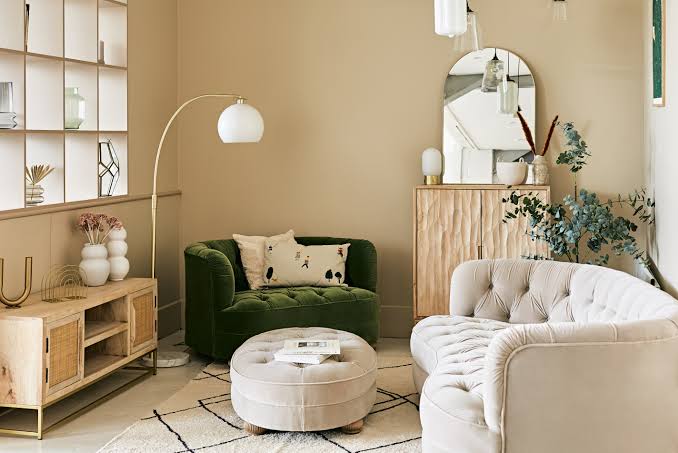

A small living room does not have to feel cramped or uncomfortable. With the right furniture arrangement, colors, lighting, storage, and decorative choices, you can make a compact space feel more open and inviting without changing its actual size.
The key is to improve how the eye experiences the room. Interior designers commonly use techniques such as reducing visual clutter, increasing visible floor space, reflecting light with mirrors, and drawing attention upward to create a stronger sense of openness.
Whether you live in an apartment, small house, studio, or compact family home, the following ideas can help you make your living room feel larger.
1. Choose Light and Simple Colors
Color can have a major effect on how spacious a room feels.
Light shades such as soft white, cream, beige, pale gray, and other gentle neutral tones can help reflect available light and create an airy appearance. You do not necessarily have to make everything pure white. A consistent, light color palette can work just as well.
Using too many strongly contrasting colors can make a small room feel visually busy. A simple palette with a few complementary accent colors can create better visual continuity.
You can still add personality with cushions, artwork, curtains, rugs, and decorative accessories.
2. Use a Large Mirror
A large mirror is one of the simplest ways to create the impression of additional space.
When positioned thoughtfully, a mirror can reflect natural light and provide the visual impression of another opening or area beyond the wall. Placing a mirror opposite a window or another attractive light source can be particularly effective.
Instead of filling the wall with several small mirrors, consider using one larger mirror as a focal point. This can create a cleaner appearance while helping the room feel brighter.
3. Let Natural Light Into the Room
Natural light can make a compact living room feel more open.
Avoid blocking windows with large furniture whenever possible. Keep curtains and blinds open during the day, and consider lightweight window treatments that allow daylight to enter.
If privacy is important, sheer curtains can provide some coverage without making the room feel completely closed off.
A brighter room generally feels more welcoming and spacious than a room dominated by dark corners.
4. Layer Your Lighting
The room should not depend entirely on one ceiling light.
Use a combination of overhead lighting, floor lamps, table lamps, wall lights, or other suitable fixtures. Layering light at different heights can help illuminate dark corners and create greater visual depth. Current interior-design guidance also emphasizes using multiple light sources rather than relying on a single overhead fixture.
For a small living room, wall-mounted lighting can be particularly useful because it provides illumination without taking up valuable table or floor space.
5. Choose Furniture That Fits the Room
Furniture scale is extremely important in a small living room.
A sofa that is too large can dominate the room and leave little space for movement. On the other hand, filling the room with numerous tiny pieces of furniture can also make it feel cluttered.
Choose furniture that provides the seating and storage you need without overwhelming the available space.
Furniture with exposed legs can also make the floor more visible, creating a lighter visual effect. Glass or acrylic tables can provide another way to maintain open sightlines.
6. Keep the Floor as Visible as Possible
Visible floor area can make a room appear more open.
Avoid filling every available section of the floor with furniture, baskets, storage boxes, and decorative objects. Instead, concentrate furniture into a practical arrangement that leaves clear pathways.
Wall-mounted shelves, floating cabinets, and furniture raised slightly from the floor can help create more visible floor space.
The goal is not necessarily to own less furniture but to make sure every piece has a useful purpose.
7. Keep Walkways Clear
A clear pathway can dramatically improve the feeling of space.
Arrange sofas, chairs, tables, and storage so that people can move naturally through the room without constantly walking around furniture.
Think about where you enter the room and where you naturally want to walk. Keep those areas as open as possible.
Current design advice similarly emphasizes clear pathways and thoughtful furniture placement as important elements of an airy living room.
8. Use Curtains to Make the Ceiling Feel Higher
Curtains can influence how tall a room appears.
Instead of installing curtain rods directly at the top of the window frame, consider positioning them closer to the ceiling and allowing the curtains to fall toward the floor.
Vertical lines naturally draw the eye upward, which can make the room feel taller. High-mounted curtains and tall shelving are commonly used to create this effect.
Choose relatively simple curtains rather than very heavy treatments that visually dominate the room.
9. Use Vertical Storage
When floor space is limited, look upward.
Tall shelving, narrow bookcases, wall-mounted cabinets, and high storage can provide useful space without occupying as much floor area as wide furniture.
Vertical storage also draws attention upward, which can make the ceiling appear higher.
Try to keep shelves organized rather than filling them with too many objects. Open storage can quickly become visual clutter if every available space is packed.
10. Reduce Unnecessary Clutter
Clutter can make even a reasonably sized room feel small.
Look carefully at the items sitting on coffee tables, shelves, cabinets, window ledges, and the floor. Remove things that you do not use or need.
You do not have to create an extremely minimalist room. Instead, aim for a balanced space where important decorative objects have room to stand out.
A cleaner visual environment allows the eye to move more easily around the room.
11. Select a Suitable Coffee Table
A large, heavy coffee table can consume valuable visual and physical space.
Consider a table that fits the size of your seating arrangement. Round or oval tables can sometimes make movement easier because they do not have sharp corners.
Glass or transparent tables can also help preserve sightlines across the room. Designers frequently recommend transparent surfaces in small rooms because they provide function without creating as much visual weight.
12. Use One Larger Rug Instead of Several Small Ones
A properly sized rug can visually connect the seating area and create a more unified appearance.
A very small rug that sits independently in the middle of the room can make the furniture arrangement appear disconnected.
Choose a rug that works with the proportions of your seating area and does not make the room look fragmented.
The exact ideal size depends on the room and furniture arrangement, so measure the space before buying.
13. Keep the Color Scheme Consistent
A consistent palette can help different elements of the room feel connected.
For example, you might combine warm beige walls with cream furniture, natural wood, and a few muted accent colors.
This does not mean everything needs to match perfectly. Instead, use related tones that create a visual flow.
When walls, furniture, curtains, flooring, and accessories compete with each other, the room can feel busier and smaller.
14. Use Furniture With Multiple Functions
Small living rooms benefit from furniture that serves more than one purpose.
An ottoman can provide seating, act as a footrest, and offer hidden storage. A storage bench can provide seating while keeping blankets or other items out of sight.
A compact sofa bed can also be useful in a room that occasionally needs to function as a guest area.
Multifunctional furniture allows you to reduce the number of separate items occupying the room.
15. Mount the Television When Practical
A television stand can take up a surprising amount of floor space.
If appropriate for your wall and installation requirements, mounting the television can free some floor area. A slim or floating media console can provide storage without appearing as heavy as a large freestanding cabinet.
Always ensure that wall mounting is done safely and that the wall and mounting system are suitable for the television’s weight.
16. Draw Attention Upward
Small rooms can benefit from design elements that encourage the eye to travel vertically.
Tall plants, narrow shelving, artwork positioned thoughtfully on the wall, vertical curtains, and taller storage units can all create a stronger sense of height.
The objective is to prevent the room from appearing visually compressed at floor level.
17. Avoid Overdecorating the Walls
Decorating every wall can make a small living room feel crowded.
Instead, choose a few pieces that create interest without overwhelming the available space.
One large artwork or a carefully arranged gallery can sometimes look more organized than many unrelated decorations spread across every wall.
Leave some empty wall space. Negative space is not wasted space; it can make the surrounding decorations more noticeable.
18. Choose Furniture With Exposed Legs
Furniture that sits directly on the floor can look visually heavy.
Sofas, chairs, and cabinets with visible legs allow more floor to be seen underneath them. This can create a lighter and more open appearance.
You do not need to replace every piece of furniture. Even changing one or two visually heavy items can make a noticeable difference.
19. Use Reflective Surfaces Carefully
Mirrors are not the only reflective surfaces that can help distribute light.
Glass, polished finishes, metallic accents, and certain glossy surfaces can reflect light and add visual depth.
However, too many reflective surfaces can make a room feel cold or overly busy. Use them selectively and combine them with softer materials such as fabric, wood, and textured accessories.
20. Create a Clear Focal Point
A small room can feel disorganized when there are too many competing focal points.
Choose one main feature, such as a window, fireplace, television, artwork, or attractive wall.
Arrange the furniture so that the room has a clear visual center. This can make the space feel more intentional and organized.
21. Keep Furniture Slightly Away From Walls When Possible
Pushing every piece of furniture tightly against the walls may seem like the best way to create floor space, but it does not always produce the desired effect.
Depending on the room layout, slightly floating furniture can create better circulation and a more intentional arrangement. Design experts also recommend experimenting with furniture placement rather than automatically pushing everything against the walls.
Even a small amount of breathing room can change how the arrangement feels.
22. Keep Decorations Simple
Decorations should enhance the room rather than compete with it.
Choose a few meaningful pieces instead of covering every surface with ornaments. Plants, artwork, cushions, books, and decorative objects can all add character when used thoughtfully.
A small living room can still have personality without being overloaded.
23. Use the Same Flooring Where Possible
If several connected areas share the same flooring, maintaining visual continuity can make the overall space feel larger.
Different flooring colors and patterns can visually divide an already small area.
If you are replacing flooring, consider how the new material will interact with nearby rooms and transitions.
24. Keep the Room Organized Every Day
A room can look spacious immediately after decorating but gradually become cluttered through everyday use.
Create a simple storage system for remote controls, books, blankets, toys, magazines, and other frequently used items.
When everything has a place, it becomes easier to maintain the open appearance of the room.
25. Remember That Bigger Does Not Always Mean Better
The goal is not to make your living room look empty.
A successful small living room should remain comfortable, functional, and welcoming. Removing too much furniture or decoration can make the room feel unfinished rather than spacious.
Instead, focus on balance. Keep the things you actually use, arrange them carefully, and remove visual obstacles that make the room feel crowded.
A Simple Small Living Room Makeover Plan
If you want to improve your living room without spending a lot of money, start with the simplest changes.
First, remove unnecessary clutter and rearrange the furniture to create a clear pathway. Next, maximize natural light and add another light source if the room has dark corners.
Then consider adding a large mirror, simplifying the color scheme, and replacing one bulky piece of furniture with a lighter alternative.
Finally, organize storage and keep decorative items under control.
These changes can often make a noticeable difference without requiring construction or a major renovation.
Conclusion
Making a small living room feel bigger does not necessarily require expensive remodeling. The most effective improvements often involve how you use light, furniture, color, storage, and visual space.
Light colors can create an airy atmosphere, mirrors can reflect light and add visual depth, and appropriately sized furniture can improve movement. Clear pathways, vertical storage, exposed furniture legs, and carefully chosen decorations can further strengthen the feeling of openness.
Most importantly, do not try to follow every design trend at once. Choose the ideas that suit the size, shape, lighting, and purpose of your living room.
A small space can be comfortable and stylish when every element is planned with intention.
Frequently Asked Questions
How can I make my small living room look bigger?
Start by reducing clutter, improving furniture placement, increasing natural light, using a large mirror, and choosing a simple light-colored palette.
What color makes a small living room look bigger?
Light and relatively soft colors such as warm white, cream, beige, and pale gray can help create an airy appearance. A consistent color palette can also reduce visual fragmentation.
Do mirrors really make a small room look bigger?
Yes. A well-positioned mirror can reflect light and views, creating the visual impression of greater depth. Positioning one opposite a window or light source can be particularly effective.
Should furniture be pushed against the walls in a small living room?
Not necessarily. Depending on the room, slightly floating furniture can create better circulation and a more intentional layout. Experiment with different arrangements before deciding where each piece should go.
What type of furniture is best for a small living room?
Choose appropriately scaled furniture that provides the functions you need without blocking pathways. Pieces with exposed legs, transparent surfaces, or multiple functions can also help reduce visual heaviness.
How can I make a small living room feel taller?
Use vertical elements such as tall shelving, high-mounted curtains, vertical artwork, and tall plants. These features encourage the eye to move upward.
Should I use a large or small rug in a small living room?
A rug should be appropriately sized for the seating arrangement. A very small rug can make the furniture look disconnected, while a properly proportioned rug can visually unify the space.
How can I reduce clutter in a small living room?
Remove items you rarely use and give frequently used objects a dedicated storage location. Closed cabinets, storage ottomans, baskets, and wall-mounted shelves can help keep surfaces organized.
What type of lighting works best in a small living room?
Layered lighting is generally more effective than relying on a single overhead fixture. Combine natural light with suitable ceiling, floor, table, or wall lighting to reduce dark areas and add depth.
Can curtains make a small living room look bigger?
Yes. Hanging curtains closer to the ceiling and allowing them to extend toward the floor can draw the eye upward and create the impression of greater height.
Is minimalist decoration necessary for a small living room?
No. A small living room does not have to be completely minimalist. The important thing is to avoid unnecessary visual clutter and maintain enough open space for comfortable movement.
What is the easiest change to make a small living room feel larger?
Decluttering and rearranging the furniture are good starting points because they cost little or nothing. After that, improving lighting and adding a strategically placed mirror can further enhance the sense of space.