


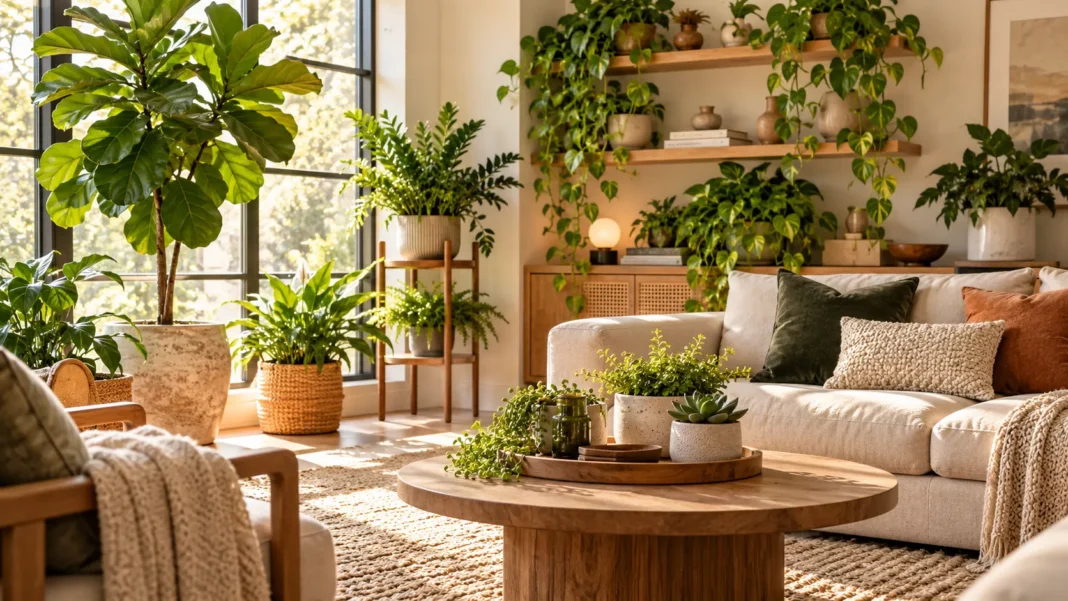

Start With Light and Room Layout
Before choosing a spot for a plant, notice how sunlight moves through the room. A bright south-facing window can suit sun-loving plants, while a darker corner may need a low-light variety. Matching a plant to the light it can actually receive helps it stay healthy and keeps your styling looking fresh.
Think about how you use each space, too. Keep plants clear of doorways, busy walkways, and places where they could be knocked over. A plant can soften an empty corner or frame a reading chair, but it should not make everyday movement around the room harder.
Use the room’s existing features to guide placement. Windows, shelves, side tables, and empty wall corners can all become natural places for greenery. Start with one or two plants, then add more only where they improve the balance of the room rather than filling every available surface.
Choose Plants That Suit Your Home
Choose indoor plants according to the conditions you can provide, not just their appearance. Pothos and snake plants are popular choices for beginners because they tolerate a range of indoor conditions. If you have bright natural light, consider plants such as succulents or a rubber plant, checking each variety’s specific care needs before buying.
Consider the amount of time you can give to plant care. Some plants need regular watering and attention, while others prefer their soil to dry between waterings. If your schedule is busy, a few hardy plants may be easier to manage than a large collection with different care routines.
Leaf shape and color can help plants work with your décor. Broad leaves create a bold focal point, while delicate or trailing foliage can add a softer touch. Mixing a few different leaf shapes often looks more natural than choosing several plants that all have the same form.
Create Height With Plant Stands and Hanging Pots
Varying plant height makes a room feel more layered. Place a tall floor plant beside a sofa or in an empty corner, then add a medium-sized plant on a stand nearby. Smaller plants can sit on a table or shelf, creating a gentle progression instead of a row of containers at one level.
Plant stands help lift greenery into view and make use of unused floor space. Choose a stand that feels stable and fits the room’s style, whether it is made from wood, metal, or another material. Check that the pot sits securely and that the plant still receives suitable light.
Hanging pots can bring greenery into a room without taking up table or floor space. They work well near bright windows, provided the plant gets appropriate light and the hook is safely secured. Keep hanging plants away from places where people might bump into them, and trim trailing stems if they begin to obstruct a walkway.
Group Plants for a Natural Look
A small group of plants can create more visual impact than several pots scattered around a room. Arrange plants with different heights and leaf shapes together, while leaving enough space for each one to grow. Grouping them on a table, bench, or stand can make the arrangement feel intentional.
Try grouping plants in odd numbers, such as three or five, to create a relaxed composition. Use one taller plant as an anchor, then place smaller ones around it. The pots can match for a coordinated look or vary slightly in color and material for a more collected feel.
Plants that share similar light and watering needs are often easier to care for when grouped together. Still, avoid crowding their leaves or placing pots so close that watering becomes difficult. Leave room for air to move between plants, and check each one individually rather than assuming every pot needs the same care.
Style Indoor Plants in the Living Room
The living room often has enough space for a larger statement plant. A floor plant beside a sofa, fireplace, or reading chair can soften hard edges and draw attention to an otherwise empty area. Make sure its mature size will suit the spot, so its leaves do not block light or crowd nearby furniture.
Use smaller plants to add greenery to coffee tables, shelves, or sideboards. A single compact plant can complement a stack of books or a lamp without making the surface feel cluttered. If you arrange several objects together, vary their heights and leave some open space around them.
For an open-plan living area, plants can help define zones without adding a wall. A tall plant beside a chair or at the edge of a seating area creates a subtle visual boundary. Keep the arrangement balanced with the rest of the room, and ensure people can still see and move through the space comfortably.
Add Greenery to Bedrooms and Quiet Spaces
A bedroom can feel calmer with a small amount of greenery. Place a suitable plant on a dresser, shelf, or windowsill where it will not be knocked over. Keep it away from radiators and heating vents, which can create dry or fluctuating conditions that some plants may not tolerate well.
Choose plants based on the bedroom’s light and temperature, just as you would in other rooms. A dim corner may not support a sun-loving plant, even if it looks like the perfect styling spot. If natural light is limited, choose a variety suited to lower-light conditions or move the plant closer to a window.
Use plants sparingly in a small bedroom. One well-placed plant can add color and texture without taking up valuable space on a bedside table or floor. If you want more greenery, consider a wall shelf or a hanging pot in a spot that will not interfere with curtains, cabinets, or daily routines.
Style Plants in Kitchens and Bathrooms
Kitchens can be practical places for small indoor plants, especially near a bright window or on an open shelf. Herbs such as basil or mint may be useful if the spot receives enough light and the growing conditions suit them. Keep plants away from hot stovetops, splashing sinks, and surfaces used for food preparation.
Bathrooms can suit certain plants if the room has enough light and appropriate airflow. Some varieties tolerate humidity better than others, but high moisture does not replace the need for light or careful watering. If your bathroom has little natural light, rotate plants to a brighter room or choose another styling location.
In both spaces, avoid putting pots where they could interfere with everyday tasks. Choose containers that are easy to lift when you clean or water, and use a saucer to protect surfaces from moisture. For edible herbs, follow safe food-handling practices and avoid placing pots where cleaning products can reach them.
Use Shelves, Windowsills, and Small Surfaces
Shelves and windowsills are useful for displaying compact plants, especially when floor space is limited. Arrange a few pots alongside books, framed photos, or other objects, leaving enough room for the plants’ leaves to spread. Before placing a pot on a windowsill, check that the surface is wide and stable enough to support it.
Trailing plants can add movement to a shelf when their stems are allowed to drape gently over the edge. Keep the trails trimmed if they reach a desk, doorway, or place where they might be pulled. Make sure the plant receives suitable light and that you can reach it easily for watering and occasional pruning.
Small surfaces can look crowded quickly, so edit the arrangement as the plants grow. A compact plant may eventually need a larger pot or a different position. Rotate plants occasionally if one side is leaning toward the window, and leave clear space for lamps, books, or other items you use regularly.
Choose Pots That Complement Your Décor
Planters affect the overall look of an indoor plant display. Ceramic pots can add color or texture, while woven baskets and natural finishes can create a warmer feel. Choose containers that complement the room, but check that each one has suitable drainage or a practical way to prevent excess water from collecting around the roots.
Repeating one or two pot colors can help greenery feel connected across a room. For example, several neutral planters can work with different furniture styles, while a few colorful pots can add contrast to a simple space. A consistent palette gives the display a more considered look without requiring every container to match.
Decorative planters should also be practical. If a pot has no drainage hole, use a nursery pot inside it and remove the inner pot when watering so excess water can drain away. Add saucers or protective mats where needed, and check them regularly to prevent water damage to shelves and floors.
Keep Your Plant Display Balanced
A well-styled plant display has a mix of greenery and breathing room. If every surface is covered, even attractive plants can make a room feel crowded. Step back and look at the whole arrangement, then move or remove a pot if the display competes with furniture, artwork, or the room’s main focal point.
Repeat shapes, colors, or materials to make plants feel connected to the rest of the décor. A wood stand might echo a nearby shelf, while a dark planter can pick up details from a light fixture. These small connections help greenery feel like part of the room rather than an afterthought.
As plants grow, their placement may need to change. A pot that once fit neatly on a side table might become too large, while a trailing plant may need more room to spread. Revisit your arrangements every few months and adjust them to suit the plants’ size, health, and the way you use the space.
Maintain Plants So They Stay Attractive
Healthy plants are the foundation of good indoor plant styling. Learn how often each plant needs water by checking its soil and care requirements rather than watering every pot on the same schedule. Remove dry leaves, dust broad foliage gently, and check for signs of pests so small problems are easier to address.
Rotate pots from time to time if plants lean toward a light source. This can encourage more even growth, though the amount of rotation depends on the plant and its location. If a plant looks stressed, review its light, watering, drainage, and temperature before moving it to a different spot.
Build care into a simple routine that suits your household. You might check soil moisture on a regular day or wipe down leaves while dusting the room. Keeping a few notes about watering or growth can help you spot patterns, especially when you are learning how different indoor plants respond to your home.
Conclusion
Styling indoor plants around your home starts with choosing spots that suit both the plants and the way you live. Pay attention to light, room layout, and the space each plant will need as it grows. A few well-placed plants can bring texture and color to a room without making it feel crowded.
Use height, plant groupings, and complementary pots to create displays that feel connected to your décor. Shelves, corners, windowsills, and hanging planters can all work when they are safe, practical, and easy to maintain. Adjust the arrangement over time as your plants grow or your needs change.
You do not need a large collection to make greenery part of your home. Begin with plants that suit your light and care routine, then add more where they improve the room. With thoughtful placement and consistent attention, indoor plants can make everyday spaces feel more welcoming.
FAQs
Where should I place indoor plants in my home?
Place each plant where its light and temperature needs can be met. Windows, shelves, corners, and plant stands can all work, provided the spot is safe, accessible, and does not block everyday movement.
How do I style plants in a small room?
Use compact plants on shelves or windowsills, and consider a stable hanging planter to free up floor space. Keep surfaces uncluttered and choose plants that will remain a suitable size for the room.
How many plants should I group together?
There is no fixed number, but groups of three or five can create a balanced display. Vary the plants’ heights and leaf shapes, and leave enough room to water and care for each one.
Which indoor plants are easiest to style?
Pothos and snake plants are popular options because they can suit a range of interiors and conditions. Check the light, watering, and temperature needs of any plant before choosing where to display it.
How can I make indoor plants look coordinated?
Repeat a few colors, materials, or shapes across your planters and stands. You can mix different plant varieties while using a consistent pot palette to help the greenery feel connected to the room.