


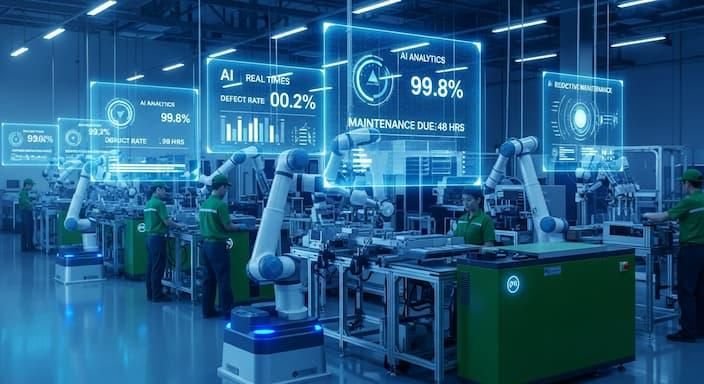

Automation is transforming the global workforce at an unprecedented pace. Powered by advancements in artificial intelligence (AI), robotics, machine learning, and smart software, automation is changing how businesses operate and how employees perform their jobs. From manufacturing and healthcare to finance and retail, organizations are increasingly adopting automated systems to improve productivity, reduce costs, and enhance efficiency.
While automation creates new opportunities for innovation and economic growth, it also raises important questions about employment, workforce development, and the future of work. Understanding its impact is essential for businesses, governments, and workers preparing for an increasingly digital economy.
What Is Automation?
Automation refers to the use of technology to perform tasks with minimal or no human intervention. It ranges from simple software that automates repetitive office tasks to advanced robots capable of assembling products, analyzing data, and assisting customers.
Modern automation combines artificial intelligence, machine learning, robotics, cloud computing, and data analytics to complete complex processes faster and more accurately than traditional manual methods.
Why Automation Is Growing
Several factors are driving the rapid adoption of automation across industries.
Businesses seek greater efficiency, lower operating costs, improved productivity, and higher accuracy. At the same time, technological advancements have made automation tools more affordable and accessible for organizations of all sizes.
Growing customer expectations for faster services, along with labor shortages in certain industries, have also accelerated investment in automation technologies.
Positive Impacts on the Global Workforce
Increased Productivity
Automation enables businesses to complete repetitive tasks quickly and consistently. Machines can operate continuously without fatigue, increasing production output while reducing errors.
Employees can focus on higher-value activities such as problem-solving, creativity, innovation, and customer relationship management.
Creation of New Job Opportunities
Although some jobs are automated, new roles continue to emerge. Demand is growing for professionals in artificial intelligence, robotics, cybersecurity, software development, cloud computing, data science, and automation management.
As technology evolves, many careers are shifting toward positions that require technical knowledge, critical thinking, and digital skills.
Improved Workplace Safety
Automation reduces employee exposure to dangerous environments by allowing robots and automated systems to handle hazardous tasks.
Industries such as mining, construction, manufacturing, and chemical processing benefit from improved workplace safety and fewer occupational injuries.
Higher Quality and Accuracy
Automated systems perform repetitive processes with remarkable precision, reducing mistakes and improving product quality.
This leads to greater customer satisfaction, lower waste, and more consistent business operations.
Challenges of Automation
Job Displacement
One of the biggest concerns surrounding automation is the displacement of workers performing repetitive or routine tasks.
Manufacturing, transportation, customer service, and administrative positions are among the roles most affected by automation. Workers may need to transition into new careers as businesses adopt advanced technologies.
Skills Gap
As automation increases demand for technical expertise, many workers face challenges adapting to rapidly changing job requirements.
Employers and educational institutions must invest in training programs that help workers develop digital, analytical, and problem-solving skills.
Income Inequality
Automation may widen income disparities if high-skilled workers benefit more than those in lower-skilled occupations.
Governments and businesses play an important role in supporting workforce transitions through education, retraining, and inclusive employment policies.
Industries Most Affected by Automation
Manufacturing
Factories increasingly rely on robotics and automated production lines to improve efficiency, reduce costs, and maintain consistent product quality.
Healthcare
Automation assists healthcare professionals by supporting medical imaging, patient record management, robotic surgery, and administrative tasks, allowing providers to spend more time on patient care.
Retail
Retail businesses use automation for inventory management, self-checkout systems, personalized marketing, and customer support through AI-powered chatbots.
Finance
Banks and financial institutions automate fraud detection, loan processing, customer service, compliance monitoring, and investment analysis to improve accuracy and speed.
Transportation and Logistics
Automation is transforming logistics through warehouse robots, route optimization software, automated inventory systems, and the development of autonomous vehicles.
Preparing the Workforce for the Future
Continuous learning has become essential in an automated economy. Workers who invest in new skills will be better positioned to adapt to changing workplace demands.
Businesses should provide ongoing employee training, while governments can support workforce development through education initiatives, vocational programs, and digital literacy campaigns.
Collaboration between employers, educational institutions, and policymakers will help ensure that automation creates opportunities rather than leaving workers behind.
The Future of Work
Automation is unlikely to eliminate human workers entirely. Instead, it will reshape job responsibilities by allowing people and machines to work together.
Future workplaces will emphasize collaboration between employees and intelligent technologies. Human skills such as creativity, leadership, emotional intelligence, communication, and complex decision-making will become even more valuable as routine tasks become increasingly automated.
Organizations that successfully balance technology with human talent will be better equipped to compete in the evolving global economy.
Conclusion
Automation is redefining the global workforce by improving productivity, enhancing workplace safety, and creating new career opportunities. At the same time, it presents challenges related to job displacement, workforce reskilling, and economic inequality.
The future of work will depend on how businesses, governments, and individuals respond to these changes. By investing in education, continuous learning, and technological innovation, societies can harness the benefits of automation while building a more resilient and inclusive workforce.
Frequently Asked Questions (FAQs)
1. What is automation?
Automation is the use of technology, software, or machines to perform tasks with minimal human intervention, improving efficiency and accuracy.
2. How does automation affect employment?
Automation can replace certain repetitive jobs while creating new opportunities in technology, engineering, data analysis, cybersecurity, and other emerging fields.
3. Which industries are most impacted by automation?
Manufacturing, healthcare, retail, finance, transportation, logistics, agriculture, and customer service are among the industries experiencing significant automation.
4. Does automation always lead to job losses?
Not necessarily. While some roles may disappear, automation also creates new jobs and changes existing roles, increasing demand for workers with advanced technical and interpersonal skills.
5. What skills are important in an automated workplace?
Digital literacy, problem-solving, critical thinking, communication, creativity, adaptability, data analysis, and technical skills are increasingly valuable.
6. How does automation improve workplace safety?
Automation allows robots and machines to perform hazardous tasks, reducing employee exposure to dangerous environments and lowering the risk of workplace injuries.
7. Can small businesses benefit from automation?
Yes. Small businesses can automate routine tasks such as accounting, customer support, inventory management, and marketing, improving efficiency while reducing operating costs.
8. What role does artificial intelligence play in automation?
Artificial intelligence enables automated systems to learn from data, recognize patterns, make decisions, and continuously improve their performance.
9. How can workers prepare for increased automation?
Workers should invest in continuous learning, acquire digital and technical skills, pursue professional certifications, and remain adaptable to changing workplace technologies.
10. What is the future of automation in the workforce?
Automation will continue to expand across industries, with humans and intelligent machines working together to increase productivity, drive innovation, and create new career opportunities while transforming traditional job roles.