


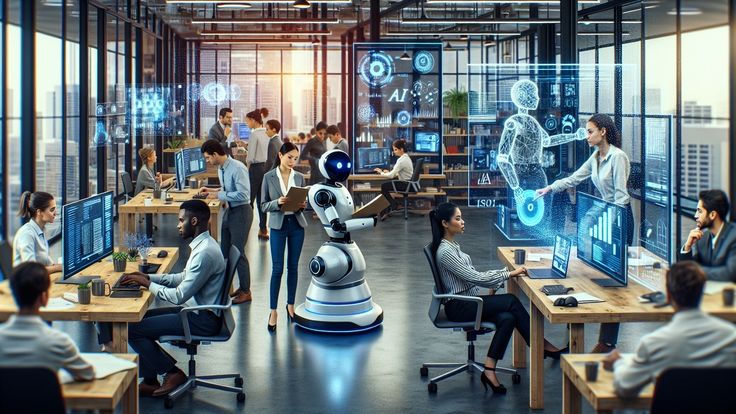
, robotics, and machine)
Automation is transforming the way people work and how businesses operate. Technologies such as artificial intelligence (AI), robotics, and machine learning are automating repetitive tasks, improving efficiency, and creating new opportunities across industries. While automation changes many traditional jobs, it also creates demand for new skills and careers.
As businesses continue adopting advanced technologies, the future of work will focus on collaboration between humans and intelligent systems rather than replacing people entirely.
What Is an Automated Economy?
An automated economy is one where machines, software, and AI perform many routine tasks that were previously completed by humans. Automation improves productivity, reduces costs, and helps businesses deliver products and services more efficiently.
It is now used in industries such as manufacturing, healthcare, finance, retail, transportation, and customer service.
Why Automation Is Growing
Businesses are investing in automation to improve speed, accuracy, and efficiency. Advances in AI, cloud computing, robotics, and data analytics allow companies to automate repetitive processes while reducing operational costs.
Growing customer expectations and increasing competition are also encouraging organizations to adopt automated solutions.
How Automation Is Changing Jobs
Automation is changing the nature of work rather than eliminating all jobs. Routine and repetitive tasks are increasingly handled by machines, allowing employees to focus on creative thinking, decision-making, customer relationships, and problem-solving.
Many existing roles are evolving as workers learn to use new digital tools and technologies.
New Career Opportunities
Automation is creating demand for professionals in artificial intelligence, cybersecurity, software development, cloud computing, robotics, and data analytics. Businesses also need experts who can manage automated systems and interpret business data.
As technology advances, entirely new job categories will continue to emerge.
The Importance of Digital Skills
Future workers will need strong digital skills to remain competitive. Knowledge of technology, communication, critical thinking, and adaptability will become increasingly valuable across all industries.
Continuous learning and professional development will help workers adapt to changing workplace requirements.
Benefits of an Automated Economy
Automation offers several advantages for businesses and employees. It increases productivity, improves accuracy, reduces repetitive work, and allows companies to focus on innovation.
Employees can spend more time on meaningful tasks that require creativity, collaboration, and strategic thinking.
Challenges of Automation
Despite its benefits, automation also presents challenges. Some workers may need to learn new skills as job responsibilities change. Businesses must invest in employee training while governments and educational institutions support workforce development.
Organizations must also address ethical concerns related to data privacy, AI decision-making, and workplace equality.
The Role of Artificial Intelligence
Artificial intelligence is driving much of today’s automation. AI helps businesses analyze data, improve customer service, automate workflows, detect fraud, and make faster decisions.
Rather than replacing human expertise, AI often supports employees by handling repetitive tasks and providing valuable insights.
Preparing for the Future
Businesses and workers can prepare for an automated economy by embracing lifelong learning, adopting new technologies, and developing adaptable skills. Investing in education and digital training will help individuals remain valuable in an evolving job market.
Organizations that combine automation with human creativity will be better positioned for long-term success.
Conclusion
The future of work in an automated economy will be shaped by innovation, technology, and continuous learning. While automation will change many traditional roles, it will also create new opportunities that require human creativity, leadership, and problem-solving.
Businesses that invest in technology while supporting employee development will gain a competitive advantage. For workers, building digital skills and staying adaptable will be essential for success in the modern workplace.
Frequently Asked Questions (FAQs)
1. What is an automated economy?
An automated economy uses technologies such as AI, robotics, and software to perform tasks that were traditionally completed by humans.
2. Will automation replace all jobs?
No. Automation changes many jobs but also creates new career opportunities that require human skills and expertise.
3. Which industries use automation the most?
Manufacturing, healthcare, finance, retail, logistics, transportation, and customer service are among the leading industries adopting automation.
4. What skills are important in an automated economy?
Digital literacy, problem-solving, communication, creativity, adaptability, and technical skills are becoming increasingly valuable.
5. How does AI support automation?
AI analyzes data, automates repetitive tasks, improves decision-making, and enhances customer service.
6. What are the benefits of automation for businesses?
Automation increases efficiency, reduces costs, improves accuracy, and supports faster business operations.
7. What challenges does automation create?
Challenges include workforce reskilling, changing job roles, ethical concerns, and the need for continuous employee training.
8. How can workers prepare for automation?
Workers can prepare by learning new digital skills, staying updated with technology, and participating in ongoing education and training.
9. Can small businesses benefit from automation?
Yes. Affordable automation tools help small businesses improve productivity, reduce manual work, and enhance customer experiences.
10. What is the future of work in an automated economy?
The future will combine human expertise with intelligent technologies, creating more efficient workplaces while increasing demand for skilled, adaptable professionals.