


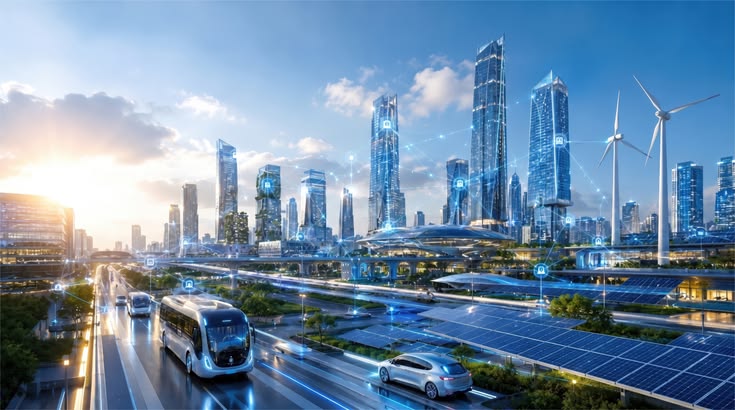

Cities are growing rapidly. More than half of the world’s population already lives in urban areas, and this number is expected to increase significantly in the coming decades. As cities become larger and more complex, governments and planners face major challenges related to transportation, energy, housing, waste management, public safety, and environmental sustainability.
Smart cities are emerging as a solution to these challenges. By combining digital technology, data analytics, artificial intelligence (AI), and sustainable infrastructure, smart cities aim to improve the quality of life for residents while making urban systems more efficient and environmentally friendly. Understanding the future of smart cities helps us see how technology may shape the places where we live, work, and travel.
What Is a Smart City?
A smart city uses technology and data to manage urban services more effectively. Sensors, connected devices, communication networks, and software platforms collect information from across the city and help officials make better decisions.
The goal is not simply to add technology everywhere. A smart city seeks to create a cleaner, safer, more efficient, and more inclusive urban environment for its residents.
Why Smart Cities Are Becoming Important
Rapid urbanisation places pressure on roads, public transport, water supplies, energy systems, healthcare services, and housing. Traditional urban infrastructure often struggles to keep pace with population growth.
Smart city technologies help cities respond more quickly to problems, optimise the use of resources, and plan for future growth. They also support environmental goals by reducing waste and improving energy efficiency.
Key Technologies Behind Smart Cities
Several technologies work together to create smart city systems.
Internet of Things (IoT)
IoT devices include sensors, cameras, smart meters, and connected infrastructure that collect real-time data about traffic, energy use, air quality, water consumption, and public services.
Artificial Intelligence (AI)
AI analyses large amounts of urban data to identify patterns, predict problems, optimise traffic flow, manage energy demand, and improve public services.
Big Data Analytics
Big data platforms process information from millions of devices and help city planners make evidence-based decisions.
5G and Advanced Connectivity
High-speed communication networks allow connected devices to exchange information quickly, supporting real-time applications such as traffic management and emergency response.
Smart Transportation
Transportation is one of the most visible areas of smart city development. Future urban mobility may include:
- AI-controlled traffic signals
- Real-time public transport information
- Smart parking systems
- Electric vehicle charging networks
- Autonomous vehicles
- Shared mobility platforms
These innovations aim to reduce congestion, shorten travel times, improve safety, and lower emissions.
Smart Energy Systems
Cities consume enormous amounts of energy. Smart energy systems help manage electricity more efficiently by using smart grids, renewable energy sources, battery storage, and intelligent demand management.
Future cities may increasingly rely on solar power, wind energy, and local energy generation, reducing dependence on fossil fuels and improving resilience during power disruptions.
Sustainable Buildings
Buildings account for a large share of urban energy use. Smart buildings use sensors and automation to control lighting, heating, cooling, ventilation, and security systems.
These technologies can reduce energy consumption, lower operating costs, and improve indoor comfort. Green building materials and energy-efficient designs are also becoming more common.
Water and Waste Management
Smart cities use digital tools to manage water and waste more effectively.
Examples include:
- Smart water meters that detect leaks
- Sensors that monitor water quality
- Intelligent waste bins that report when they are full
- Route optimisation for waste collection vehicles
- Recycling tracking systems
These systems help conserve resources and reduce operational costs.
Public Safety and Emergency Response
Technology can improve public safety through faster communication and better situational awareness. Smart city systems may support:
- Emergency alerts
- Traffic management during incidents
- Disaster monitoring
- Smart street lighting
- Real-time coordination between emergency services
Any use of surveillance technologies must be balanced with strong privacy protections and legal safeguards.
Healthcare in Smart Cities
Urban healthcare systems are also becoming more connected. Smart city healthcare initiatives may include:
- Telemedicine services
- Remote patient monitoring
- AI-assisted diagnostics
- Digital health records
- Public health data analysis
These technologies can improve access to care and support more efficient healthcare delivery.
Citizen Participation and Digital Services
Future smart cities are expected to give residents a greater role in urban decision-making. Mobile apps and online platforms can allow citizens to report problems, access public services, participate in consultations, and receive real-time information about their communities.
Digital government services can reduce paperwork and improve convenience for residents.
Challenges of Smart Cities
Despite their potential benefits, smart cities also face important challenges.
Data Privacy
Collecting large amounts of data raises concerns about how personal information is stored, shared, and protected.
Cybersecurity
Connected infrastructure can become a target for cyberattacks, making strong security essential.
Cost and Infrastructure
Building smart city systems requires significant investment in technology, networks, and maintenance.
Digital Inclusion
Not all residents have equal access to digital tools and internet services. Smart city development must avoid creating new forms of inequality.
The Role of Governments and Businesses
Smart city development requires collaboration between governments, technology companies, utility providers, researchers, and local communities. Public-private partnerships often help finance infrastructure projects and accelerate innovation.
Clear regulations, transparency, and public trust are essential for successful implementation.
The Future of Urban Development
The cities of the future are likely to be more connected, sustainable, and data-driven. Emerging trends include:
- Net-zero carbon neighbourhoods
- AI-powered urban planning
- Digital twins of cities for simulation and planning
- Autonomous public transport systems
- Circular economy infrastructure
- Climate-resilient urban design
These developments aim to create cities that are not only technologically advanced but also environmentally sustainable and socially inclusive.
Conclusion
Smart cities represent a major shift in how urban areas are designed and managed. By using data, connectivity, artificial intelligence, and sustainable infrastructure, cities can improve transportation, energy use, public services, healthcare, and environmental performance.
However, technology alone is not enough. The future of urban development will depend on thoughtful planning, strong governance, cybersecurity, privacy protection, and inclusive policies that ensure all residents benefit from innovation. As urban populations continue to grow, smart cities may become an essential part of building a more sustainable and efficient future.
Frequently Asked Questions (FAQs)
1. What is a smart city?
A smart city uses digital technology, data, sensors, and connected infrastructure to improve urban services, efficiency, sustainability, and quality of life for residents.
2. How do smart cities improve transportation?
Smart cities use technologies such as intelligent traffic signals, real-time public transport information, smart parking systems, electric vehicle infrastructure, and AI-based traffic management to reduce congestion and improve mobility.
3. What are the environmental benefits of smart cities?
Smart cities can reduce energy consumption, lower emissions, improve waste management, conserve water, support renewable energy, and promote more sustainable urban development.
4. Are smart cities safe from cyberattacks?
Smart cities can improve public safety, but connected systems also create cybersecurity risks. Strong security measures, monitoring, and data protection policies are essential.
5. How do citizens interact with smart city systems?
Residents may use mobile apps and online platforms to access public services, receive alerts, report problems, participate in community decisions, and obtain real-time information about transportation and city services.
6. What is the biggest challenge facing smart cities?
Major challenges include protecting privacy, securing connected infrastructure, funding large-scale projects, integrating older infrastructure, and ensuring that all residents benefit from digital services regardless of income or access to technology.