


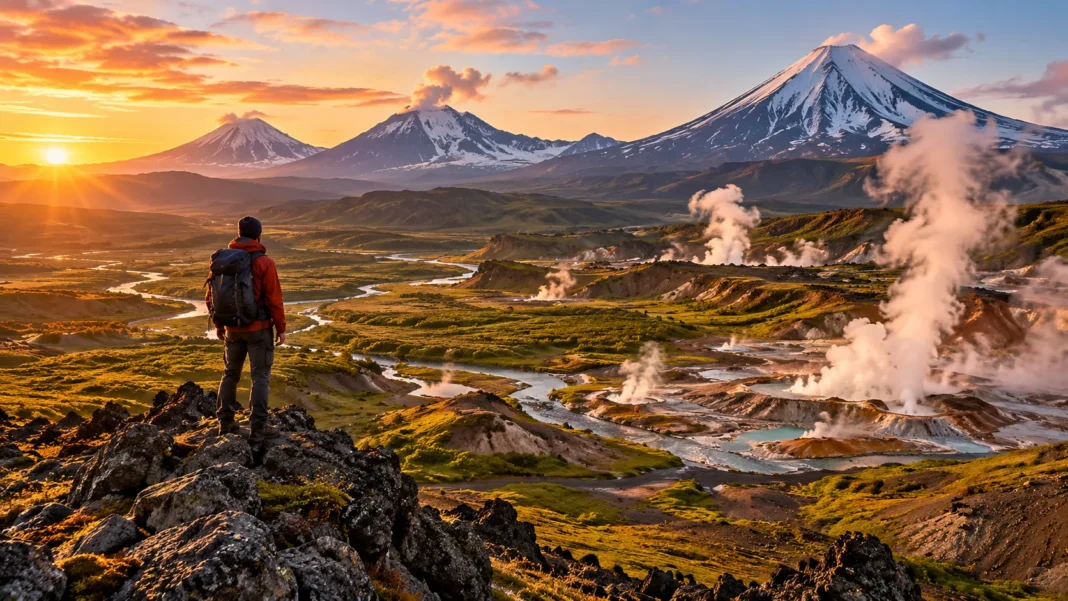

Kamchatka is one of the most extraordinary destinations in the Russian Far East, famous for its towering volcanoes, spectacular geysers, vast wilderness, and remarkable wildlife. Located on a remote peninsula between the Pacific Ocean and the Sea of Okhotsk, this region offers some of the most dramatic landscapes in the world. Exploring the best things to do in Kamchatka reveals breathtaking natural wonders, fascinating geological formations, and unique cultural traditions.
Unlike conventional holiday destinations, Kamchatka is characterized by rugged terrain, limited transportation infrastructure, and large protected natural areas. Its volcanic mountains, thermal springs, wild coastlines, and beautiful valleys attract considerable interest from nature enthusiasts and photographers. However, travel requires careful preparation because volcanic activity, changing weather, restricted access, and limited emergency services create significant challenges.
This comprehensive Kamchatka travel guide explores the region’s best-known attractions, including the Valley of Geysers, Avachinsky Volcano, Kuril Lake, and the beautiful Pacific coastline. It also covers seasonal weather, regional culture, transportation, and essential planning considerations. Importantly, several governments currently advise against travel to Russia, so prospective visitors should review official travel warnings before making any arrangements.
1. Explore Petropavlovsk-Kamchatsky and Its Scenic Surroundings
Petropavlovsk-Kamchatsky is the administrative center of Kamchatka Krai and the region’s most important urban destination. Situated along Avacha Bay, the city is surrounded by impressive volcanic mountains and coastal landscapes. Its distinctive geographical setting makes it an interesting starting point for learning about Kamchatka’s history, environment, and regional identity.
Visitors interested in cultural sightseeing can discover local museums, public squares, historical monuments, and scenic viewpoints. The Kamchatka Regional Museum offers opportunities to learn about the peninsula’s natural history and Indigenous cultures. The surrounding city landscape also provides striking views of snow-covered mountains rising above residential neighborhoods and harbor facilities.
Petropavlovsk-Kamchatsky has more accommodation, dining, and transportation infrastructure than Kamchatka’s remote settlements. Nevertheless, international travel restrictions and limited regional connections can complicate access. The city is best understood as an important geographical and cultural center rather than a conventional destination with extensive tourist facilities.
2. Admire the Magnificent Avachinsky Volcano
Avachinsky Volcano is one of Kamchatka’s most recognizable natural landmarks, rising prominently near Petropavlovsk-Kamchatsky. This active stratovolcano reaches approximately 2,741 meters above sea level and contributes to the dramatic mountain skyline surrounding the city. Its impressive appearance makes it an important symbol of the peninsula’s volcanic geography.
The volcano is part of a broader volcanic landscape that includes neighboring mountains and geological formations. Visitors can appreciate its striking shape from established viewpoints around the city and surrounding region. Seasonal snow, changing clouds, and sunlight create beautiful photographic conditions that highlight Kamchatka’s remarkable natural environment.
Because Avachinsky is an active volcano, conditions around the mountain can change unexpectedly. Volcanic gases, unstable terrain, harsh weather, and official access restrictions may create serious hazards. Sightseeing should remain within authorized areas, and travelers should never assume that a volcano is safe simply because it appears quiet.
3. Discover the Extraordinary Valley of Geysers
The Valley of Geysers is one of Kamchatka’s most famous natural attractions and a remarkable example of geothermal activity. Located within the Kronotsky Nature Reserve, this remote valley contains numerous geysers, hot springs, steaming vents, and colorful mineral formations. Its unusual landscape makes it one of the world’s most distinctive geothermal environments.
The valley’s geological features result from underground heat interacting with water and surrounding rock formations. Steam rising from the landscape creates an extraordinary atmosphere, particularly when viewed against forested hillsides and river valleys. The area’s fragile ecosystems also support scientific research into geothermal processes and environmental conservation.
Access to the Valley of Geysers is tightly controlled because the region is protected and difficult to reach. Authorized visits generally involve specialized arrangements and established viewing routes. Geothermal ground can be unstable and dangerously hot, making independent exploration inappropriate. Conservation restrictions also help protect delicate formations and surrounding wildlife habitats.
4. Experience the Beauty of Kuril Lake
Kuril Lake is one of Kamchatka’s most impressive natural destinations, located in the southern part of the peninsula. This beautiful volcanic lake is internationally recognized for its remarkable sockeye salmon populations and surrounding wilderness. Its dramatic setting includes mountainous landscapes, forested areas, and striking geological formations.
The lake is particularly important because salmon returning to its waters support an extraordinary natural ecosystem. Brown bears gather in the surrounding region during salmon runs, creating significant interest among wildlife researchers and photographers. The relationship between the lake, fish populations, and terrestrial wildlife demonstrates Kamchatka’s ecological richness.
Kuril Lake lies within a protected area, and wildlife observation is subject to strict conservation and safety rules. Brown bears are powerful wild animals that must never be approached or disturbed. Viewing opportunities, where authorized, require professional supervision and controlled arrangements that prioritize both wildlife protection and visitor safety.
5. Discover Kamchatka’s Famous Brown Bears
Kamchatka is internationally known for its substantial brown bear population, which inhabits forests, river valleys, coastal areas, and other natural environments. These impressive animals play an important role in the peninsula’s ecosystems. Their presence is closely connected with seasonal food availability, particularly salmon migrations through rivers and lakes.
Wildlife researchers study how brown bears interact with salmon populations and contribute to nutrient movement between aquatic and terrestrial habitats. Their behavior provides valuable insight into the balance of Kamchatka’s natural ecosystems. The region’s remote landscapes make it especially important for the conservation of large mammal populations.
Bear encounters involve serious risks, and observation should only occur through permitted professional wildlife programs where available. Visitors must never feed, approach, or attempt to photograph bears at close range. Respecting protected habitats and maintaining appropriate boundaries are essential for minimizing disturbance and reducing the possibility of dangerous encounters.
6. Explore the Beautiful Khalaktyrsky Black Sand Beach
Khalaktyrsky Beach is one of Kamchatka’s most distinctive coastal attractions, known for its extensive shoreline covered in dark volcanic sand. Located along the Pacific coast near Petropavlovsk-Kamchatsky, the beach offers dramatic views of the ocean and surrounding mountain landscapes. Its unusual appearance makes it a memorable location for coastal photography.
The dark sand reflects the region’s volcanic geological history, creating a striking contrast with the waves and changing coastal skies. Visitors can appreciate the vast open landscape and the powerful atmosphere of the North Pacific. On clear days, distant volcanic mountains contribute to the extraordinary scenery surrounding this beautiful coastline.
Although visually attractive, Khalaktyrsky Beach is not a typical tropical swimming destination. Cold water, powerful waves, changing currents, and unpredictable weather can create dangerous conditions. Coastal sightseeing should take place only in appropriate accessible areas, with visitors respecting environmental guidance and avoiding unsafe contact with the ocean.
7. Admire the Natural Beauty of Avacha Bay
Avacha Bay is one of the most impressive coastal features in Kamchatka, providing a dramatic natural harbor surrounded by mountains and volcanic landscapes. The bay is closely connected with the history and development of Petropavlovsk-Kamchatsky. Its sheltered waters have long supported maritime activities and regional transportation.
One of the bay’s recognizable landmarks is the Three Brothers rock formation, consisting of distinctive sea stacks near the entrance to the harbor. These formations create beautiful scenery and are associated with local stories and traditions. The surrounding coastline also provides important habitats for seabirds and other marine wildlife.
Visitors interested in coastal geography can appreciate the bay from authorized public viewpoints and suitable waterfront locations. Maritime access may be restricted in certain areas because of port operations or security considerations. Changing marine conditions also require caution, making established sightseeing arrangements more appropriate than unplanned exploration.
8. Discover Mutnovsky Volcano and Its Geothermal Landscapes
Mutnovsky Volcano is another important geological landmark in southern Kamchatka, famous for its rugged volcanic terrain and geothermal activity. The mountain complex features volcanic craters, fumaroles, and mineral-rich landscapes associated with active geological processes. Its dramatic appearance makes it especially interesting to researchers and enthusiasts of volcanic environments.
Steam rising from volcanic openings creates striking scenery against the surrounding mountains and rocky slopes. Nearby geological formations demonstrate the powerful natural processes that continue shaping the peninsula. The broader area contains landscapes influenced by volcanic heat, seasonal snow, and changing environmental conditions.
However, Mutnovsky is an active volcanic system, and access to particular areas may be restricted or prohibited. Toxic gases, unstable ground, and sudden weather changes can make the environment extremely dangerous. Travelers should rely on official access information and avoid entering hazardous volcanic zones, even when popular photographs suggest that an area is accessible.
9. Explore Gorely Volcano and Its Crater Landscapes
Gorely Volcano is a remarkable volcanic complex in southern Kamchatka, known for its multiple craters and unusual geological formations. Its landscape reflects repeated volcanic activity over long periods, resulting in a distinctive combination of ridges, depressions, and rocky surfaces. The region attracts considerable interest from people studying volcanology and natural geography.
Some of Gorely’s craters have contained lakes or other striking geological features, although their appearance can change over time. The surrounding terrain provides insight into the processes responsible for creating volcanic landforms. Weather, seasonal snow, and geological activity contribute to the landscape’s constantly changing character.
Gorely should be viewed as an active geological environment rather than an ordinary recreational mountain. Crater edges, geothermal areas, and exposed slopes can present significant hazards. Access restrictions must be respected, and sightseeing should focus on permitted viewpoints under suitable conditions rather than attempting to approach unstable volcanic features.
10. Experience Kamchatka’s Natural Hot Springs
Kamchatka is famous for its geothermal activity, which has created numerous natural hot springs throughout the peninsula. Underground heat warms mineral-rich water that emerges through geological formations in different parts of the region. These thermal features contribute to Kamchatka’s reputation as one of the world’s most remarkable volcanic landscapes.
The Paratunka area, located inland from the regional airport and Petropavlovsk-Kamchatsky, is particularly associated with developed thermal bathing facilities. Some established accommodation properties incorporate heated mineral-water pools into their services. These facilities offer a different way to appreciate the peninsula’s geothermal character without entering remote volcanic areas.
Not all hot springs are suitable for bathing because temperatures, water chemistry, and ground stability vary significantly. Natural geothermal pools may contain dangerously hot water or hazardous gases. Visitors should only use properly managed facilities with appropriate safety information and avoid entering unknown thermal waters.
11. Discover Klyuchevskoy Volcano and Its Dramatic Scenery
Klyuchevskoy Volcano is among the most impressive geological landmarks in Kamchatka and one of Eurasia’s highest active volcanoes. Its steep, symmetrical cone dominates a remarkable volcanic landscape in the central part of the peninsula. The mountain is particularly significant to volcanologists because of its activity and geological characteristics.
The volcano belongs to the Klyuchevskaya group, which includes several remarkable volcanic formations. Their immense scale and dramatic surroundings illustrate the powerful forces responsible for shaping Kamchatka. Snow-covered slopes, clouds, and changing light can create unforgettable views from appropriate distant locations.
Volcanic activity around Klyuchevskoy can involve dangerous ash emissions and other significant hazards. Access restrictions may change quickly, and nearby terrain can be difficult to navigate even during quieter periods. Visitors should treat the region as a sensitive and potentially dangerous environment, following official warnings without approaching restricted areas.
12. Learn About Kamchatka’s Indigenous Cultures
Kamchatka’s cultural heritage is closely connected with Indigenous communities, including the Itelmen, Koryak, and Even peoples. Their traditions reflect centuries of adaptation to the peninsula’s climate, natural resources, and geographic isolation. Learning about these cultures adds important human context to a region often described primarily through its wilderness.
Traditional knowledge includes distinctive artistic expressions, storytelling, fishing practices, clothing, and relationships with the surrounding environment. Museums and appropriate cultural programs may introduce visitors to these aspects of regional heritage. Community traditions remain diverse, and Indigenous cultures should be understood as living identities rather than simply historical attractions.
Responsible cultural tourism requires respect for local communities and their authority over how traditions are shared. Visitors should choose community-supported experiences where available and request permission before photographing individuals or cultural activities. Understanding Kamchatka’s Indigenous heritage creates a richer appreciation of the peninsula beyond its dramatic natural scenery.
13. Best Time to Visit Kamchatka
The best time to visit Kamchatka for general nature sightseeing is often between July and September, when conditions are relatively mild compared with the long winter months. Summer provides extended daylight and greater accessibility to some established regional routes. However, rain, fog, and sudden temperature changes remain common possibilities.
July and August are often associated with green landscapes, active wildlife ecosystems, and seasonal tourism operations. September may bring beautiful autumn colors and cooler weather, although conditions become increasingly unpredictable. Even during summer, mountain snow and severe weather can affect transportation and access to natural attractions.
Winter extends across much of the year in Kamchatka, with substantial snowfall and freezing conditions affecting large parts of the peninsula. Remote journeys may be especially difficult during this period. Travelers should remember that favorable seasonal weather does not remove the security concerns, volcanic hazards, or official travel restrictions affecting the region.
14. How to Reach Kamchatka and Get Around
Kamchatka is one of Russia’s most geographically isolated regions, with no conventional road connection linking the peninsula to the country’s main highway network. Air transportation is the primary means of arrival for most long-distance passengers. Yelizovo Airport, serving Petropavlovsk-Kamchatsky, functions as the region’s principal aviation gateway.
Travel within Kamchatka can be challenging because roads are concentrated around populated areas, while many remote destinations lack regular public transportation. Some protected locations are accessible only through specialized authorized services. Weather, volcanic activity, and infrastructure limitations can affect availability and schedules with little warning.
International visitors must also consider entry requirements, flight connections, payment limitations, and regional access restrictions. Travel services should not be assumed to operate normally, particularly when international sanctions or security conditions affect transportation. Current official advisories should be reviewed before considering any travel arrangements.
15. Essential Safety and Travel Planning Tips
Safety is one of the most important considerations when learning about Kamchatka as a travel destination. The peninsula contains active volcanoes, remote wilderness, unpredictable weather, and powerful wild animals. Certain natural attractions also fall within protected areas requiring permits, controlled access, or special authorization.
As of October 2026, the United States maintains a Level 4 Do Not Travel advisory for Russia, while the United Kingdom advises against all travel. These warnings concern serious security risks and potential limitations on consular assistance. Visitors should review the advice issued by their own government and consider postponing nonessential journeys.
Travelers should also understand that local route openings are temporary and can change because of storms, flooding, volcanic activity, or environmental restrictions. Emergency services may be difficult to access in remote areas, and ordinary insurance may not cover certain situations. Kamchatka is best approached with realistic expectations and an emphasis on safety rather than spontaneous wilderness exploration.
Conclusion
Kamchatka is one of the world’s most extraordinary natural regions, offering breathtaking volcanoes, remarkable geothermal landscapes, beautiful coastal scenery, and important wildlife habitats. From the Valley of Geysers and Kuril Lake to Avacha Bay and Khalaktyrsky Beach, its attractions demonstrate the incredible geological and ecological diversity of the Russian Far East.
Understanding the best things to do in Kamchatka requires recognizing both its spectacular natural features and the challenges associated with visiting them. Remote terrain, protected ecosystems, active volcanoes, and unpredictable weather make careful planning essential. Current international travel warnings also create significant concerns that should not be overlooked when considering a journey.
Whether you are researching Kamchatka for future travel, geographical interest, or a deeper understanding of Earth’s volcanic landscapes, the peninsula offers fascinating discoveries. Its extraordinary scenery and distinctive cultural heritage make it a remarkable region to learn about. Responsible appreciation of Kamchatka begins with respecting its communities, conservation requirements, and serious safety considerations.
Frequently Asked Questions (FAQs)
What is Kamchatka famous for?
Kamchatka is famous for its active volcanoes, geothermal springs, Valley of Geysers, brown bears, dramatic mountains, and Pacific coastline. Its remarkable natural landscapes make it one of Russia’s most geographically distinctive regions.
What is the best time to visit Kamchatka?
July through September is generally considered the most favorable period for nature sightseeing because temperatures are relatively mild. However, severe weather, volcanic hazards, and travel restrictions can affect access throughout the year.
Is Kamchatka safe for tourists?
Kamchatka has natural hazards including active volcanoes, remote terrain, and dangerous wildlife. As of October 2026, several governments also advise against travel to Russia because of serious security concerns.
How many days are enough to explore Kamchatka?
Seven to ten days can provide an introduction to selected accessible attractions under suitable conditions. More remote areas require additional time, specialized arrangements, and appropriate permissions, while disruptions may affect any itinerary.
Do tourists need a visa to visit Kamchatka?
Kamchatka is part of Russia, so Russian entry requirements apply. Visa eligibility depends on nationality, and some protected or restricted areas require separate authorization. Official requirements should be checked before planning travel.