


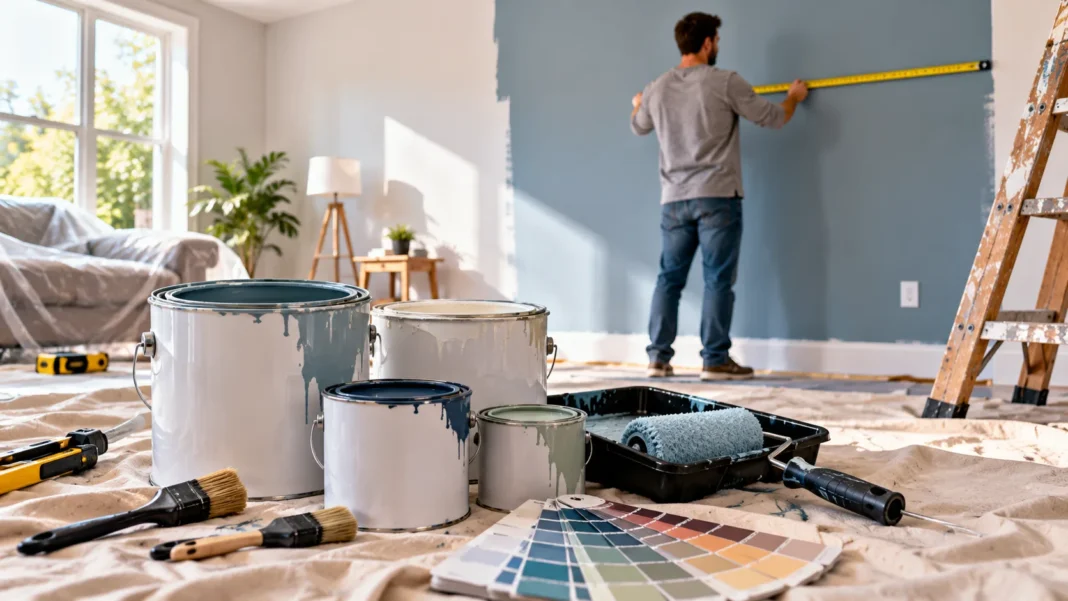

Painting a room is one of the simplest ways to refresh your home’s appearance, but buying the correct amount of paint is essential for a successful project. Purchasing too little can interrupt your work, while buying too much can increase expenses and leave unnecessary materials unused. Understanding how much paint you need helps you plan your budget, estimate coverage, and complete your painting project efficiently.
The amount of paint required depends on several factors, including room dimensions, wall height, surface texture, paint quality, and the number of coats. Doors, windows, ceilings, and architectural features can also influence the total area that needs painting. Measuring your walls correctly and understanding paint coverage rates are important steps before purchasing supplies.
Whether you are painting a small bedroom, spacious living room, kitchen, or an entire house, a reliable paint estimate can make the process easier. This room size guide explains how to calculate paint requirements, estimate gallons or liters, account for different surfaces, and avoid common mistakes. With careful planning, you can purchase suitable quantities and achieve a consistent finish.
How Much Paint Do I Need for a Room?
The amount of paint needed for a room primarily depends on the total wall surface area and the number of coats required. In the United States, one gallon of interior wall paint commonly covers approximately 350–400 square feet with one coat. Actual coverage varies according to the product, surface condition, and application method.
For example, a typical 10-by-12-foot room with 8-foot ceilings has approximately 352 square feet of wall area before subtracting doors and windows. One gallon may cover a single coat under favorable conditions. However, two coats usually require more paint, making two gallons a reasonable starting estimate for many projects of this size.
Always check the coverage information printed on the paint container because different products have different spreading rates. Primer, textured surfaces, and significant color changes can affect the amount required. Calculating the painting area before shopping helps reduce unexpected expenses and unnecessary leftover paint.
Understanding Paint Coverage Per Gallon
Paint coverage refers to the surface area that a specific quantity of paint can cover under recommended application conditions. Most standard interior paints advertise an estimated coverage range on their labels. A commonly used planning figure is 350–400 square feet per gallon for one coat on relatively smooth surfaces.
Coverage depends on factors such as paint thickness, surface absorbency, application equipment, and the manufacturer’s formulation. Newly installed drywall or porous plaster may absorb more paint than a previously painted, sealed surface. Rough textures also increase the actual surface area, requiring additional material for complete coverage.
When estimating paint requirements, use the manufacturer’s recommended coverage rather than assuming every product performs identically. Applying paint too thinly to extend coverage can cause an uneven appearance and inadequate hiding. Following product instructions generally produces more reliable results than stretching a limited amount of paint across an oversized area.
How to Measure a Room for Painting
Measuring your room is the first step in estimating paint requirements accurately. Begin by recording the length and width of each wall using a measuring tape. Multiply each wall’s width by its height to calculate the surface area, then add the results to determine the total paintable wall area.
For rectangular rooms with uniform wall heights, a simpler approach is to calculate the room’s perimeter and multiply it by wall height. For instance, a room measuring 12 feet by 14 feet has a perimeter of 52 feet. With 8-foot ceilings, the total wall area is 416 square feet before deductions.
Rooms with angled walls, alcoves, sloping ceilings, or unusual architectural features require additional measurements. Divide complicated surfaces into smaller rectangular or triangular sections before adding their areas together. Accurate measurements help prevent shortages and provide a dependable foundation for calculating paint quantities.
How to Calculate Paint Needed Using a Simple Formula
A basic paint calculation uses total paintable surface area, the number of coats, and the product’s coverage rate. First, determine the square footage of the surfaces you plan to paint. Next, multiply that area by the number of coats before dividing by the estimated coverage per gallon.
The calculation can be written as: Paint needed (gallons) = Paintable square footage × Number of coats ÷ Coverage per gallon. For example, 400 square feet of wall area requiring two coats equals 800 square feet of total coating coverage. At 400 square feet per gallon, the estimated requirement is two gallons.
This calculation provides a starting estimate rather than an exact purchasing quantity. Surface texture, application losses, and additional touch-ups can increase actual consumption. A modest allowance helps accommodate these differences, but the amount should reflect the project’s complexity instead of automatically purchasing excessive paint.
Paint Quantity Guide Based on Room Size
Room dimensions provide a convenient starting point for estimating how much paint to purchase. However, wall height and the number of coats are just as important as floor area. Two rooms with identical floor dimensions may require different quantities if one has taller ceilings or significantly larger windows.
The following estimates assume rectangular rooms with 8-foot ceilings, two coats of wall paint, and coverage of approximately 400 square feet per gallon. They exclude deductions for doors and windows, as well as extra paint for significant surface texture. The figures provide simple planning estimates rather than guaranteed quantities.
| Room size | Approximate wall area | Paint for two coats |
|---|---|---|
| 10 × 10 feet | 320 sq. ft. | 1.6 gallons |
| 10 × 12 feet | 352 sq. ft. | 1.76 gallons |
| 12 × 12 feet | 384 sq. ft. | 1.92 gallons |
| 12 × 14 feet | 416 sq. ft. | 2.08 gallons |
| 15 × 15 feet | 480 sq. ft. | 2.4 gallons |
| 20 × 20 feet | 640 sq. ft. | 3.2 gallons |
These estimates show why measuring wall area is more reliable than calculating paint based on floor dimensions alone. Choose available container sizes that accommodate the calculated amount and reasonable application losses. If doors and windows occupy substantial wall space, subtracting their area can improve accuracy.
How Much Paint Do I Need for a 10×10 Room?
A 10-by-10-foot room is a common size for a small bedroom, study, or home office. Assuming 8-foot ceilings, the total wall area is approximately 320 square feet before accounting for openings. This makes it a relatively manageable project for homeowners planning to refresh a compact interior.
At an estimated coverage rate of 400 square feet per gallon, one coat requires approximately 0.8 gallons. Two coats require around 1.6 gallons before allowances for surface conditions and application waste. Purchasing two gallons is often sufficient when painting standard smooth walls with a suitable interior product.
The actual amount may be lower if the room has large windows or several doors. Conversely, textured walls and highly absorbent surfaces may increase consumption. Measuring openings and reviewing the paint label helps ensure that your purchasing estimate matches the room’s specific requirements.
How Much Paint Do I Need for a 12×12 Room?
A 12-by-12-foot room is commonly used as a bedroom, dining area, or family space. With standard 8-foot ceilings, its four walls provide approximately 384 square feet of surface area. The actual paintable area decreases when doors, windows, and other unpainted sections are excluded.
Using a coverage estimate of 400 square feet per gallon, one coat requires approximately 0.96 gallons. Two coats require around 1.92 gallons before accounting for additional material needs. Two gallons may be enough for smooth, previously painted walls, although some conditions require more.
If you plan to paint the ceiling or use a separate accent color, calculate those surfaces independently. Different paint finishes and products may have different coverage rates. Creating separate estimates helps avoid purchasing the wrong quantity or mixing calculations for multiple colors.
How Much Paint Do I Need for a 15×15 Room?
A 15-by-15-foot room offers a larger painting area and may require additional paint compared with standard bedrooms. With 8-foot ceilings, the combined wall surface measures approximately 480 square feet. This calculation assumes four rectangular walls without deductions for doors, windows, or decorative architectural features.
At 400 square feet per gallon, a single coat requires approximately 1.2 gallons. Applying two coats increases the estimated requirement to 2.4 gallons. In practice, purchasing approximately three gallons may provide a reasonable allowance for minor losses and touch-ups, depending on available container sizes.
Larger rooms may contain fireplaces, built-in cabinets, or expansive windows that change the paintable area. Measuring these features individually can improve your estimate. Planning ahead also helps maintain consistent color and finish across the walls without interrupting the project for additional supplies.
How Much Paint Do I Need for a Living Room?
Living rooms often require more paint than smaller bedrooms because they typically have wider walls and larger dimensions. However, the exact quantity depends on ceiling height, windows, doors, and architectural details. Measuring the actual paintable surfaces provides a more reliable estimate than relying on the room’s floor area.
For example, a 20-by-15-foot living room with 8-foot ceilings has approximately 560 square feet of wall surface. At 400 square feet per gallon, two coats require around 2.8 gallons before deductions. Purchasing three gallons may be sufficient for smooth walls, although textured surfaces or extra coats can increase requirements.
Living rooms may also feature fireplaces, built-in shelves, or accent walls that require separate calculations. If different colors are being used, estimate each painted section individually. Keeping the quantities separate helps ensure enough paint is available for consistent coverage and future touch-ups.
How Much Paint Do I Need for a Bedroom?
Bedrooms vary considerably in size, but most can be measured using the same basic wall area formula. A typical bedroom measuring 12 by 14 feet with 8-foot ceilings has around 416 square feet of wall surface. Doors, windows, and built-in wardrobes may reduce the area requiring paint.
For two coats at a coverage rate of 400 square feet per gallon, this room requires approximately 2.08 gallons before subtracting openings. Measuring the actual unpainted areas may bring the estimate closer to two gallons. Additional paint might be necessary when covering a dark color or painting highly textured walls.
Bedrooms often contain furniture that must be moved or protected during painting. Planning the project carefully helps reduce accidental paint spills and unnecessary material waste. Selecting the correct paint finish and preparing the walls properly also contribute to a more consistent and durable result.
How Much Paint Do I Need for a Ceiling?
Ceiling paint requirements are generally calculated using the room’s floor dimensions. For a rectangular room, multiply its length by its width to find the ceiling area. A room measuring 12 feet by 12 feet has a ceiling surface of approximately 144 square feet.
If the selected ceiling paint covers 400 square feet per gallon, one coat requires approximately 0.36 gallons. Two coats increase the requirement to around 0.72 gallons. In this example, one gallon may be sufficient, assuming a smooth surface and no unusual application losses.
Vaulted ceilings, sloping surfaces, and exposed beams require different measurements because their actual surface area may exceed the floor area. Estimate these sections independently and review the manufacturer’s coverage recommendations. Painting high ceilings may require professional equipment and assistance to complete the work safely.
How to Account for Doors and Windows
Doors and windows reduce the amount of wall surface that needs painting. Subtracting these areas can improve the accuracy of your estimate, especially in rooms with several large openings. However, frames, trim, and doors themselves may require separate paint quantities if they are included in the project.
To calculate an opening’s area, multiply its width by its height. For example, a window measuring 4 feet by 5 feet occupies 20 square feet. Two windows of this size would reduce the wall painting area by 40 square feet.
If doors or window frames will be painted in a different color or finish, calculate them separately. This prevents confusion when purchasing wall paint and trim paint. Taking accurate measurements is particularly useful when painting rooms with large windows, sliding doors, or multiple entryways.
How Wall Texture Affects Paint Coverage
Wall texture can significantly influence how much paint is required for a project. Smooth surfaces generally provide more predictable coverage because paint spreads evenly across a relatively flat area. Textured walls contain raised sections and recesses that may require additional material to coat properly.
Orange-peel finishes, knockdown textures, rough plaster, and brick surfaces can absorb or retain different amounts of paint. Deep textures are especially likely to increase paint consumption. The amount of additional paint depends on surface roughness, product characteristics, and the application method.
Rather than relying entirely on a standard coverage estimate, consider the condition of the surfaces you plan to paint. Product instructions may provide recommendations for rough or porous materials. Testing a small section can also help establish a realistic coverage rate before purchasing supplies for an entire room.
How Many Coats of Paint Do You Need?
The number of paint coats required depends on the existing wall color, surface condition, selected paint, and desired appearance. Many interior painting projects use two finish coats to achieve uniform coverage. However, certain high-quality products may cover adequately with fewer coats under suitable conditions.
Painting a light color over a significantly darker surface may require additional preparation or coats. Strongly contrasting colors can be more difficult to conceal evenly, especially when the paint has limited hiding power. Using an appropriate primer can improve consistency and reduce uneven color appearance.
Always follow the manufacturer’s instructions concerning coat thickness, drying time, and recommended applications. Applying paint too heavily may cause drips, poor drying, or an uneven finish. Planning the correct number of coats helps ensure enough paint is available without compromising the final appearance.
Do You Need Primer Before Painting?
Primer helps prepare certain surfaces for paint by improving adhesion, creating a more uniform base, and reducing uneven absorption. It is particularly useful on new drywall, repaired patches, stained areas, and some previously unpainted materials. However, not every repainting project requires a separate primer coat.
Previously painted walls in good condition may sometimes be repainted without additional primer when compatible products are used. Major color changes, glossy surfaces, or existing stains can require specialized preparation. Choosing the appropriate primer depends on the substrate and the selected finish paint.
Primer coverage should be calculated separately because its spreading rate may differ from interior wall paint. Measure the area requiring primer and check the container’s recommended coverage. Proper preparation helps achieve consistent color and can prevent unnecessary additional finish coats.
How to Estimate Paint for Multiple Rooms
Painting several rooms requires organizing measurements and paint quantities carefully. Begin by calculating the wall area of each room individually, accounting for ceiling heights, openings, and surface conditions. This approach prevents important differences between rooms from being overlooked during the estimation process.
If multiple rooms use the same paint color and product, their required quantities can be added together. For example, three bedrooms may share a consistent wall finish, making it practical to purchase paint in larger containers. Combining estimates can simplify purchasing and reduce leftover materials.
Rooms using different colors, sheens, or paint formulations should have separate calculations. Bathrooms, kitchens, and living spaces may require products suited to different conditions. Keeping a record of each room’s dimensions and estimated paint requirements makes budgeting and project planning more manageable.
Should You Buy Extra Paint for Touch-Ups?
Purchasing a small amount of additional paint can be useful for minor spills, application losses, and future touch-ups. However, the appropriate allowance depends on project size, product availability, and the accuracy of your measurements. Buying excessive paint may increase costs and create unnecessary storage problems.
For many straightforward projects, an allowance of approximately 5–10% can be a reasonable planning consideration, although highly textured or complicated surfaces may require more. This percentage is not a substitute for measuring correctly. Always calculate the main paint requirement before deciding how much extra material is appropriate.
Store any leftover paint according to the manufacturer’s instructions, keeping containers properly sealed and away from unsuitable temperatures. Label containers with the room name, color, and purchase information. Maintaining suitable leftovers can make small repairs easier while reducing the need to purchase additional paint later.
How to Avoid Buying Too Much Paint
Accurate measurements are the most effective way to avoid purchasing unnecessary paint. Calculate wall dimensions, subtract substantial openings, and use the coverage information for your selected product. Estimating from floor area alone can lead to incorrect quantities because rooms have different wall heights and layouts.
Another useful approach is to purchase available container sizes that closely match your estimated needs. Some paints are sold in gallons, quarts, or larger buckets, allowing different purchasing combinations. Comparing the quantity required with available sizes can help reduce leftover materials and unnecessary expenses.
Avoid assuming that more paint always produces a better finish. Correct surface preparation and proper application are more important than excessive material use. Taking time to calculate requirements before shopping helps create a practical budget and supports a more organized painting project.
Common Mistakes When Calculating Paint Quantity
One common mistake is confusing floor area with wall area when estimating paint requirements. A room measuring 100 square feet does not necessarily have 100 square feet of walls. Wall surface depends on perimeter and height, making accurate calculations essential for reliable estimates.
Another mistake involves ignoring the number of coats required. A product’s advertised coverage usually describes one coat under specified conditions. If a project requires two coats, the total coverage area must be doubled before calculating the quantity of paint needed.
Homeowners sometimes also overlook surface texture, primer requirements, or unusual architectural features. These factors can cause actual paint consumption to differ from a basic estimate. Reviewing the complete project requirements and following manufacturer instructions helps prevent shortages and unnecessary purchases.
Conclusion
Understanding how much paint you need begins with accurate room measurements and a realistic estimate of surface coverage. Wall height, room perimeter, doors, windows, and the number of coats all influence the final quantity. Using the correct calculation helps homeowners prepare for painting projects without excessive spending or unnecessary interruptions.
A gallon of interior paint commonly covers approximately 350–400 square feet with one coat, although actual performance depends on the product and surface conditions. Textured walls, major color changes, and porous materials may require additional paint or primer. Checking the manufacturer’s recommendations provides a more dependable estimate.
Whether you are painting a small bedroom, large living room, or several rooms throughout your home, careful planning makes the process easier. Measuring surfaces, calculating coats, and allowing for reasonable losses can help you purchase suitable quantities. With an organized approach, you can achieve a consistent finish while managing your painting budget effectively.
Frequently Asked Questions (FAQs)
How much paint do I need for a 12×12 room?
A 12×12-foot room with 8-foot ceilings has approximately 384 square feet of wall area. Two coats require about 1.92 gallons at 400 square feet per gallon, before deductions or additional allowances.
How many square feet does one gallon of paint cover?
One gallon of standard interior wall paint typically covers approximately 350–400 square feet with one coat. Actual coverage depends on product formulation, surface texture, porosity, and application method.
Is one gallon of paint enough for a bedroom?
One gallon may cover a single coat in some small bedrooms, depending on wall area. Two coats generally require more paint, so measure the room before purchasing.
How much extra paint should I buy for touch-ups?
A modest allowance of approximately 5–10% may be reasonable for straightforward projects. The appropriate amount depends on surface conditions, application losses, and available container sizes.
Do I need two coats of paint on every wall?
Not always. Some products provide adequate coverage with one coat under suitable conditions, while other projects require two or more coats. Follow the manufacturer’s instructions and evaluate the finished appearance.